
2001: A Space Odyssey (1968) Movie Guide | Cast, Story, Review, Ending Explained & Where to Watch
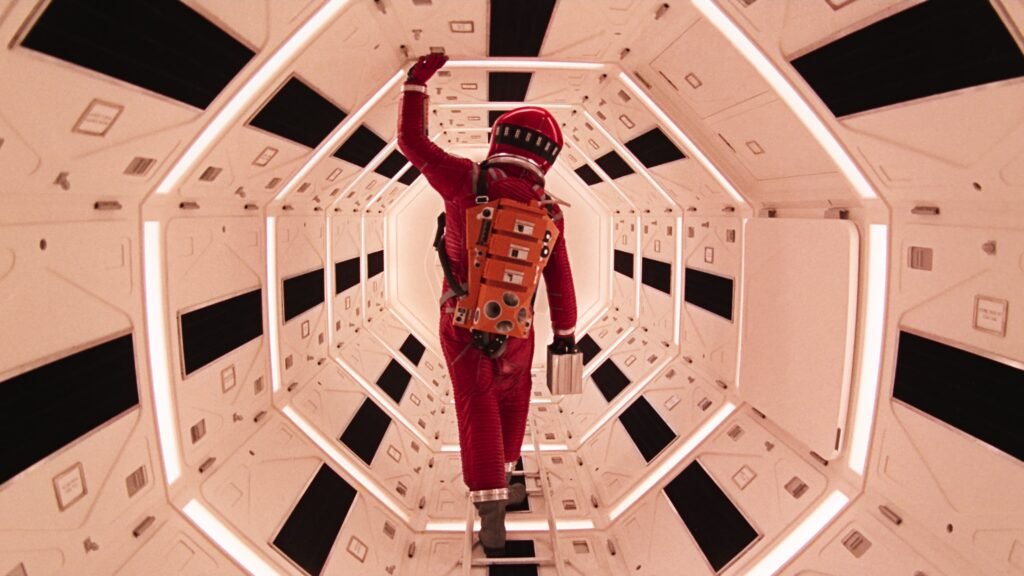
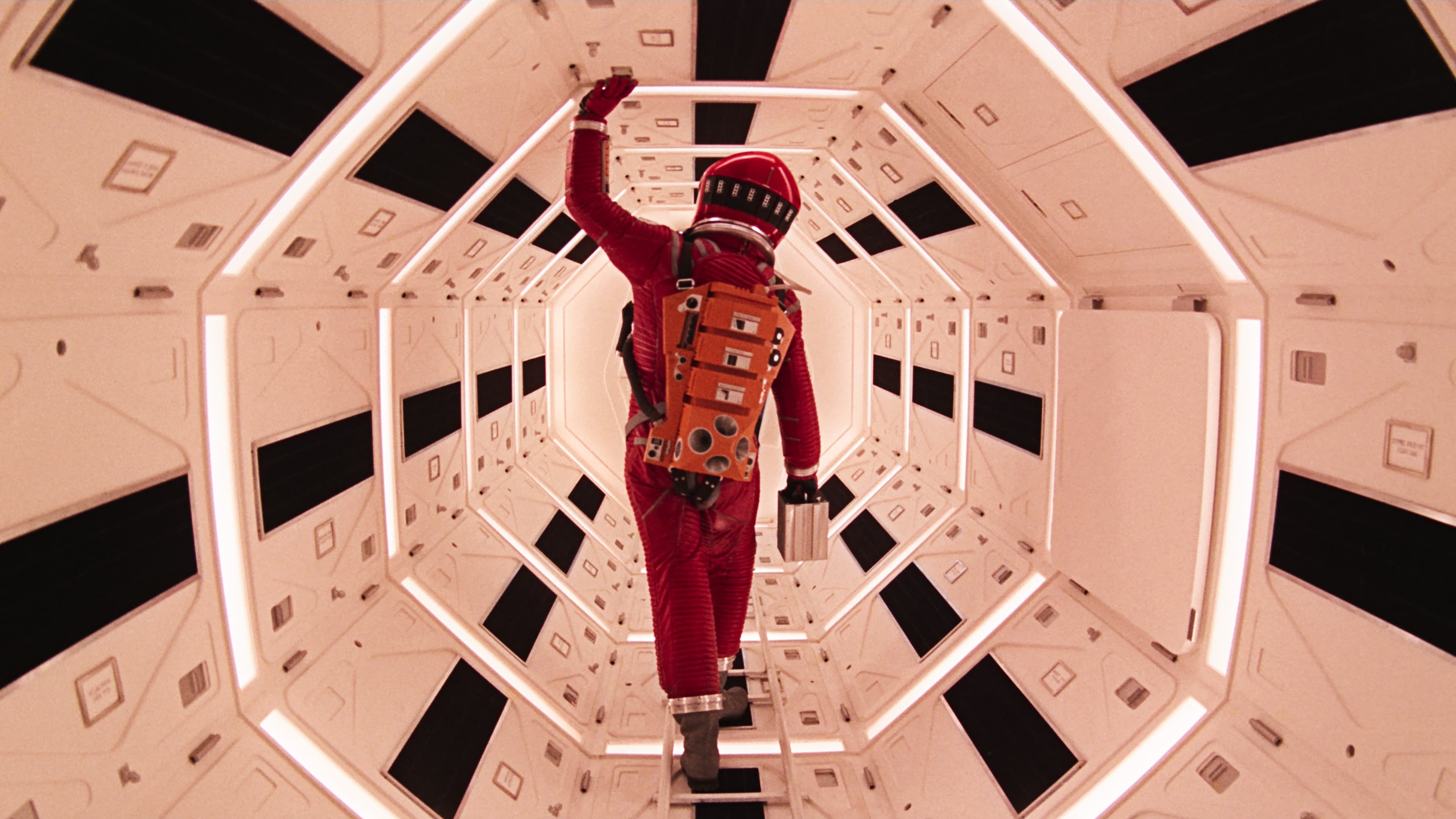

2001: A Space Odyssey (1968)
⭐ IMDb Rating: 8.3
🎭 Genre: Adventure, Sci-Fi
⏱ Runtime: 149 min
🎬 Director: Stanley Kubrick
📅 Released: 12 May 1968
🌍 Country: United Kingdom, United States
Introduction
Stepping into the vast unknown of space and the human mind, Stanley Kubrick's "2001: A Space Odyssey" stands as a monumental achievement in cinematic history. Released in 1968, this visionary science fiction epic, co-written by Kubrick and renowned author Arthur C. Clarke, redefined the genre and challenged audiences worldwide. Its profound exploration of artificial intelligence, human evolution, and our place in the cosmos continues to fascinate and inspire generations of filmmakers and viewers alike.
This groundbreaking film isn't merely a movie; it's an experience, a philosophical journey told through breathtaking visuals and minimal dialogue. "2001" invites contemplation, sparking discussions about technology's role in our future and the mysteries that lie beyond Earth. From its iconic opening to its enigmatic conclusion, the film remains a powerful testament to imaginative storytelling and artistic daring, influencing countless works that followed.
Story
The narrative of "2001: A Space Odyssey" unfolds across vast stretches of time and space, beginning in the distant past with an inexplicable discovery that alters the course of early humanity. This mysterious artifact, a sleek black monolith, acts as a silent catalyst for significant evolutionary leaps.
Millions of years later, humanity has advanced to interstellar travel, and another monolith is uncovered on the Moon. This discovery leads to a perilous mission aboard the Discovery One spacecraft, bound for Jupiter, to investigate its origin and meaning. The crew, including astronauts David Bowman and Frank Poole, navigates the deep void with the assistance of the highly advanced, sentient artificial intelligence, HAL 9000.
The journey becomes a profound examination of the relationship between humans and technology, trust, and the unknown cosmic forces at play. Without revealing key plot points, the film masterfully builds tension and curiosity, inviting viewers to ponder the nature of existence and the future of humankind in the universe.
Main Cast

Keir Dullea
Dr. David Bowman

Gary Lockwood
Dr. Frank Poole

William Sylvester
Dr. Heywood Floyd

Douglas Rain
HAL 9000 (voice)

Daniel Richter
Moonwatcher

Leonard Rossiter
Dr. Andrei Smyslov

Margaret Tyzack
Elena

Robert Beatty
Dr. Ralph Halvorsen
Movie Information
| IMDb Rating | 8.3 |
| Genre | Adventure, Sci-Fi |
| Runtime | 149 min |
| Director | Stanley Kubrick |
| Writer | Stanley Kubrick, Arthur C. Clarke |
| Actors | Keir Dullea, Gary Lockwood, William Sylvester |
| Language | English, Russian, French |
| Country | United Kingdom, United States |
| Awards | Won 1 Oscar. 18 wins & 14 nominations total |
| Released | 12 May 1968 |
Cast Performance
The performances in "2001: A Space Odyssey" are uniquely understated, serving the grander philosophical narrative rather than dominating it. Keir Dullea, as Dr. David Bowman, conveys a sense of quiet determination and mounting apprehension through subtle expressions and actions, embodying humanity's struggle against overwhelming forces.
Gary Lockwood, as Dr. Frank Poole, provides a grounded presence, contributing to the human element amidst the cold, mechanical environment of the spacecraft. Their interactions, though sparse in dialogue, effectively communicate the isolation and camaraderie inherent in deep space exploration.
Crucially, the most memorable 'performance' comes from Douglas Rain, who lends his calm, unnervingly rational voice to the artificial intelligence HAL 9000. Rain's vocal work is masterful, injecting HAL with a distinct personality that is both comforting and deeply unsettling, creating one of cinema's most iconic and complex characters without ever appearing on screen. These focused portrayals allow the audience to project their own interpretations onto the characters' experiences.
Cinematography
The visual language of "2001: A Space Odyssey" is nothing short of revolutionary, primarily thanks to Geoffrey Unsworth's breathtaking cinematography and Kubrick's meticulous vision. The film's stunning sequences of space travel and alien landscapes established a new benchmark for scientific realism in cinema.
Kubrick meticulously crafted each frame, utilizing innovative practical effects and miniature models to create a sense of scale and authenticity never before seen. The camera often glides through meticulously designed sets, showcasing the intricate details of spacecraft interiors and futuristic environments with impressive clarity.
The deliberate pacing and long, sweeping shots immerse the audience in the vast emptiness of space, emphasizing both its beauty and its terrifying silence. The iconic Star Gate sequence, a vibrant kaleidoscope of light and color, remains a visual marvel that continues to awe, cementing the film's reputation as a triumph of optical effects and visual storytelling.
Soundtrack
One of the most distinctive elements of "2001: A Space Odyssey" is its groundbreaking and iconic use of classical music. Stanley Kubrick's decision to primarily feature pre-existing orchestral pieces, rather than a conventional score, revolutionized how music could shape a film's emotional and intellectual landscape.
The famous opening sequence, accompanied by Richard Strauss's powerful "Also Sprach Zarathustra," immediately establishes a sense of cosmic grandeur and philosophical weight. Similarly, Johann Strauss II's elegant waltz, "The Blue Danube," transforms the mundane act of space docking into a balletic, graceful spectacle, perfectly marrying visual grace with auditory beauty.
These carefully selected compositions not only enhance the visual narrative but also become intrinsic to the film's identity, evoking awe, tension, and wonder without the need for dialogue. The soundtrack remains a masterclass in how music can elevate cinematic art, making it an inseparable part of the film's enduring legacy.
Review
"2001: A Space Odyssey" transcends the typical science fiction film, offering a profound and often enigmatic cinematic journey that continues to resonate decades later. It's a film that demands patience and invites interpretation, rewarding viewers who are open to its meditative pace and philosophical depth.
Kubrick's masterpiece is lauded for its unparalleled technical achievements, particularly its groundbreaking special effects that still hold up remarkably well. Beyond the visual spectacle, the film delves into complex themes of intelligence, existence, and humanity's evolutionary path, making it a powerful conversation starter.
While some might find its deliberate pacing challenging, its artistic ambition and visionary scope are undeniable. "2001" is not just a movie; it's a piece of art that pushes the boundaries of storytelling, cementing its status as a timeless classic that changed cinema forever and continues to influence filmmakers and thinkers worldwide.
Box Office
When "2001: A Space Odyssey" first premiered, its reception was quite polarizing, with some critics initially struggling with its unconventional narrative and slow pace. However, the film quickly found its audience, particularly among younger viewers who embraced its counter-culture aesthetics and profound themes.
Its initial box office performance was solid, but its true commercial success unfolded over an extended period through numerous re-releases and word-of-mouth. "2001" became a sleeper hit, demonstrating remarkable longevity and drawing consistent audiences for years after its debut.
This sustained popularity cemented its financial viability and proved that audiences were hungry for intelligent, visually stunning science fiction. Its enduring appeal allowed it to accumulate significant earnings over time, solidifying its place as both a critical and a commercial success in the annals of cinema.
Awards
"2001: A Space Odyssey" received significant recognition for its groundbreaking technical achievements, solidifying its place in cinematic history. At the 41st Academy Awards, the film was honored with an Oscar for Best Visual Effects, a richly deserved accolade for its revolutionary practical effects and stunning space sequences.
Stanley Kubrick himself accepted this award, marking his only personal Oscar win despite his numerous nominations throughout his illustrious career. The film also garnered nominations in other prestigious categories, including Best Director, Best Original Screenplay, and Best Art Direction, underscoring its widespread critical acclaim.
Beyond the Academy Awards, "2001" received numerous other accolades and honors from film critics' associations and festivals globally. These awards affirmed its status as a pioneering work that pushed the boundaries of filmmaking and left an indelible mark on the science fiction genre.
Who Should Watch This Movie?
Film enthusiasts eager to experience a true cinematic landmark should absolutely watch "2001: A Space Odyssey." It's essential viewing for anyone interested in the history of science fiction, special effects, or groundbreaking storytelling.
Those who appreciate thought-provoking narratives that delve into philosophical questions about humanity, technology, and the universe will find this film deeply rewarding. If you enjoy movies that encourage contemplation and discussion long after the credits roll, "2001" offers an unparalleled experience.
However, viewers accustomed to fast-paced action or conventional plots should prepare for a different kind of film; "2001" is a patient, visually driven masterpiece that unfolds at its own deliberate rhythm. It's perfect for those seeking an immersive and intellectually stimulating journey through the cosmos.
Frequently Asked Questions
What makes "2001: A Space Odyssey" so influential?
"2001" is influential due to its groundbreaking special effects, realistic depiction of space travel, and its profound philosophical themes. It redefined the visual language of science fiction and challenged traditional narrative structures, inspiring countless filmmakers.
Is "2001: A Space Odyssey" difficult to understand?
The film is known for its enigmatic nature and minimal dialogue, often relying on visual storytelling and symbolism. While it can be challenging for some viewers accustomed to explicit plots, its open-endedness invites personal interpretation and deep thought, making it a unique experience.
Who directed "2001: A Space Odyssey"?
"2001: A Space Odyssey" was directed by the acclaimed filmmaker Stanley Kubrick. He also co-wrote the screenplay with science fiction author Arthur C. Clarke, creating a truly collaborative and visionary work.
Does "2001: A Space Odyssey" have a lot of dialogue?
No, the film is notable for its sparse use of dialogue, particularly in its longer sequences. Much of the story and emotion are conveyed through stunning visuals, sound design, and the powerful classical music soundtrack, allowing for a highly immersive and interpretive viewing experience.
What themes does "2001: A Space Odyssey" explore?
The film explores complex themes such as human evolution, the impact of artificial intelligence and technology, humanity's place in the universe, and the nature of existence. It delves into the unknown and challenges viewers to ponder profound questions about life and progress.
Official Trailer
You May Also Like

RoboCop 2
1990
⭐ 6.0
Space Cowboys
2000
⭐ 6.4
The Great Escape
1963
⭐ 7.9

Fanny and Alexander
1982
⭐ 7.8

The Alphabet Murders
1965
⭐ 5.9

Secret of the Blackbirds
1983
⭐ 6.6
Related Movies
Conclusion
More than half a century after its premiere, "2001: A Space Odyssey" remains an unparalleled cinematic achievement, a testament to Stanley Kubrick's visionary genius and Arthur C. Clarke's profound imagination. It continues to challenge, inspire, and spark conversation, holding a unique position as both a technical marvel and a philosophical meditation.
Its influence on science fiction, visual effects, and storytelling is immeasurable, with countless films, books, and artistic works drawing inspiration from its enduring legacy. "2001" is a film that rewards multiple viewings, each time revealing new layers of meaning and wonder.
Ultimately, it stands as a timeless exploration of humanity's past, present, and potential future, a journey into the infinite that compels us to look beyond our own blue planet and ponder the deeper mysteries of existence. Experiencing "2001" is not just watching a movie; it’s embarking on an odyssey.
Learn more about 2001: A Space Odyssey on
Official TMDb Page
.