
Dead Poets Society (1989)
⭐ IMDb Rating: 8.1
🎭 Genre: Comedy, Drama
⏱ Runtime: 128 min
🎬 Director: Peter Weir
📅 Released: 09 Jun 1989
🌍 Country: United States
Introduction
Stepping back into 1989, we find a cinematic gem that profoundly impacted audiences: "Dead Poets Society." This powerful drama film, directed by Peter Weir, continues to resonate with viewers decades later. It explores themes of individuality, conformity, and the transformative power of education.
"Dead Poets Society" stars the inimitable Robin Williams in one of his most iconic roles, delivering a performance that blends his signature wit with profound gravitas. The film swiftly became a cultural touchstone, challenging conventional thinking and inspiring generations to embrace their authentic selves. Its message of 'Carpe Diem' echoes long after the credits roll.
The movie transports us to a seemingly rigid world, only to introduce a force of change that ignites intellectual curiosity and emotional growth. It's a testament to the enduring human spirit and the courage it takes to forge one's own path. This classic film truly deserves its place among the most cherished dramas of all time.
Story
The narrative unfolds within the hallowed, yet strict, halls of the prestigious Welton Academy, an all-boys preparatory school steeped in tradition. Here, students are expected to uphold the pillars of 'Tradition, Honor, Discipline, Excellence.' This environment sets the stage for a profound clash of ideals.
John Keating, an unconventional new English teacher and a Welton alumnus, arrives to challenge the rigid curriculum with his unorthodox methods. He inspires his students to think critically, express themselves creatively, and 'seize the day.' His teachings encourage them to look beyond the textbook and find their own voices.
Keating's influence leads a group of students to revive the secret 'Dead Poets Society,' a clandestine club dedicated to poetry and free thought. Through these meetings, the boys explore literature, forge deep bonds, and discover the thrilling, yet sometimes perilous, path of self-expression. The story beautifully captures their journey of awakening within a restrictive world.
Main Cast
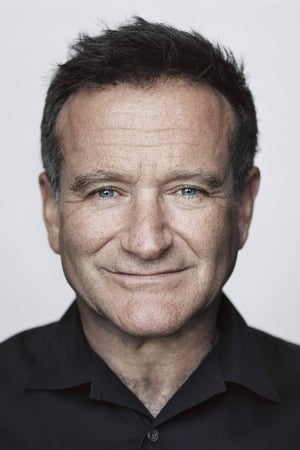
Robin Williams
John Keating
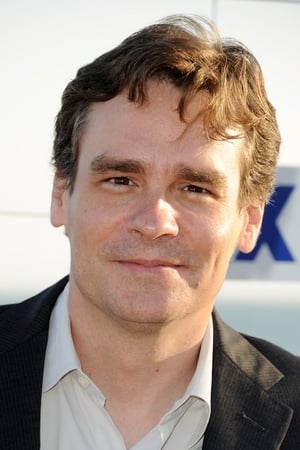
Robert Sean Leonard
Neil Perry

Ethan Hawke
Todd Anderson
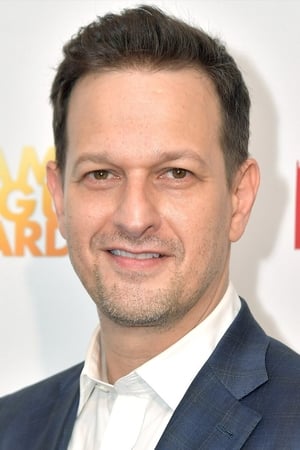
Josh Charles
Knox Overstreet

Gale Hansen
Charlie Dalton
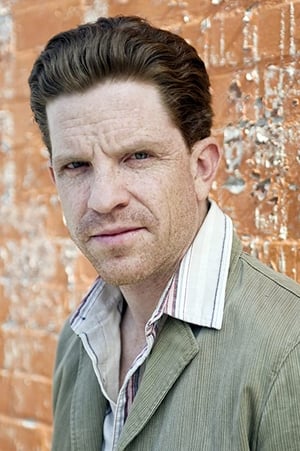
Dylan Kussman
Richard Cameron

Allelon Ruggiero
Steven Meeks
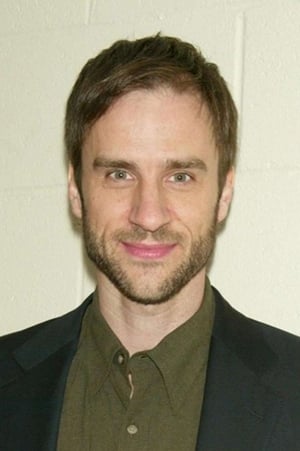
James Waterston
Gerard Pitts
Movie Information
| IMDb Rating | 8.1 |
| Genre | Comedy, Drama |
| Runtime | 128 min |
| Director | Peter Weir |
| Writer | Tom Schulman |
| Actors | Robin Williams, Robert Sean Leonard, Ethan Hawke |
| Language | English, Latin, French |
| Country | United States |
| Awards | Won 1 Oscar. 20 wins & 19 nominations total |
| Released | 09 Jun 1989 |
Cast Performance
Robin Williams delivers an extraordinary performance as John Keating, capturing the essence of an inspiring, enigmatic mentor. His portrayal is both deeply comedic and intensely moving, showcasing his incredible range as an actor. Williams imbues Keating with a warmth and intellectual passion that is truly captivating.
Among the impressive young ensemble cast, Ethan Hawke shines as Todd Anderson, a shy and introverted student who finds his voice under Keating's guidance. Robert Sean Leonard also delivers a memorable performance as Neil Perry, a talented student grappling with parental expectations. Their nuanced acting brings genuine emotional depth to the film's core relationships.
The entire cast contributes significantly to the film's authenticity and emotional resonance. Their collective performances beautifully convey the excitement, fear, and introspection of young men on the cusp of self-discovery. Each actor plays a vital role in making the narrative feel incredibly real and impactful for audiences.
Cinematography
The cinematography of "Dead Poets Society," masterfully handled by John Seale, plays a crucial role in establishing the film's distinctive atmosphere. It captures the austere beauty of the New England boarding school, contrasting its grand, imposing architecture with the vibrant inner lives of the students. The visual storytelling is rich and evocative.
Seale's camera work often emphasizes the confined nature of the school environment, using stately, classical framing that mirrors the institution's strict adherence to tradition. However, it also opens up to reveal the natural beauty of the surrounding landscapes, symbolizing the freedom and expansion of thought Keating encourages. This visual contrast is very effective.
Warm, natural light often bathes scenes of inspiration and camaraderie, highlighting moments of intellectual awakening and emotional connection. The visual palette shifts subtly to underscore the evolving emotional tones of the narrative, from the regimented beginnings to the burgeoning spirit of rebellion and self-expression. The visual language significantly enhances the storytelling.
Soundtrack
The poignant score for "Dead Poets Society" was composed by Maurice Jarre, whose masterful work subtly underscores the film's emotional landscape. The music expertly weaves a tapestry of hope, longing, and youthful exuberance. Jarre's compositions enhance the narrative without ever overshadowing it.
The soundtrack features delicate orchestral pieces that evoke both the timeless elegance of the academic setting and the burgeoning passion within the students. It includes thematic motifs that resonate with Keating's inspiring lessons and the boys' personal journeys. The music becomes an integral part of the storytelling, amplifying key emotional beats.
Beyond Jarre's original score, the film also incorporates classical selections that deepen its intellectual and emotional resonance. These carefully chosen pieces add layers of sophistication and timelessness to the narrative. The music, much like the poetry in the film, serves as a powerful medium for expression and connection.
Review
"Dead Poets Society" stands as an enduring cinematic masterpiece, a powerful meditation on the courage to think for oneself. It masterfully blends drama, coming-of-age themes, and a profound message of embracing individuality. The film's 'Carpe Diem' philosophy resonates deeply, encouraging viewers to live passionately and authentically.
Peter Weir's direction is superb, crafting a story that is both emotionally gripping and intellectually stimulating. Robin Williams delivers a career-defining performance, embodying the inspiring, yet ultimately tragic, figure of John Keating with incredible nuance. The film's screenplay, which earned an Academy Award, is sharp, insightful, and beautifully written.
This movie remains a touchstone for many, celebrating the power of education to inspire critical thought and artistic expression. It bravely addresses themes of conformity versus individuality, tradition versus innovation, and the importance of finding one's unique voice. "Dead Poets Society" is not just a film; it's an experience that continues to provoke reflection and discussion.
If you enjoyed this film, check out our guides to The Shawshank Redemption (1994) and Life Is Beautiful (1997) for more great movie recommendations.
Ending Explained
Spoiler warning: this section describes the final act of Dead Poets Society (1989).
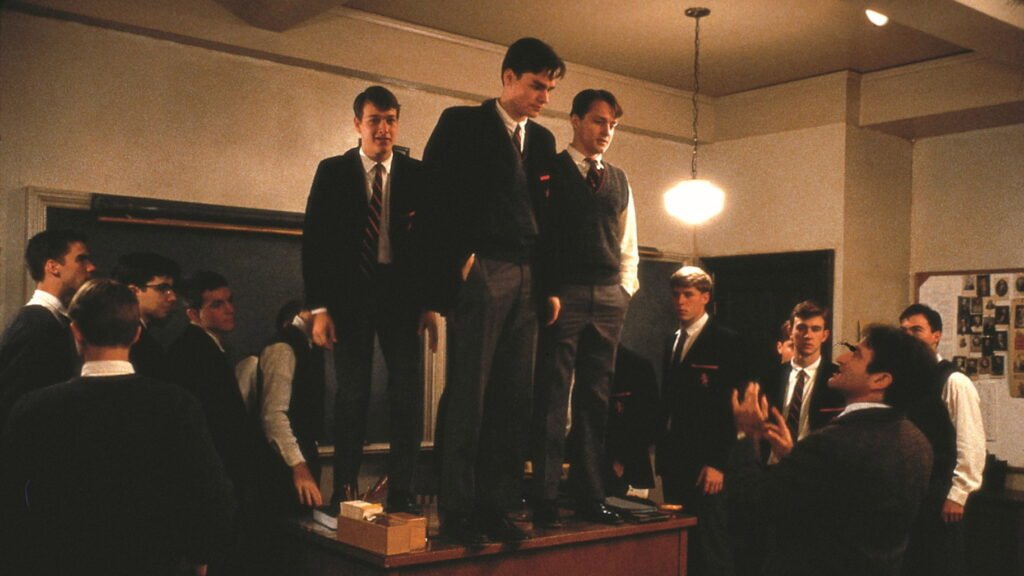
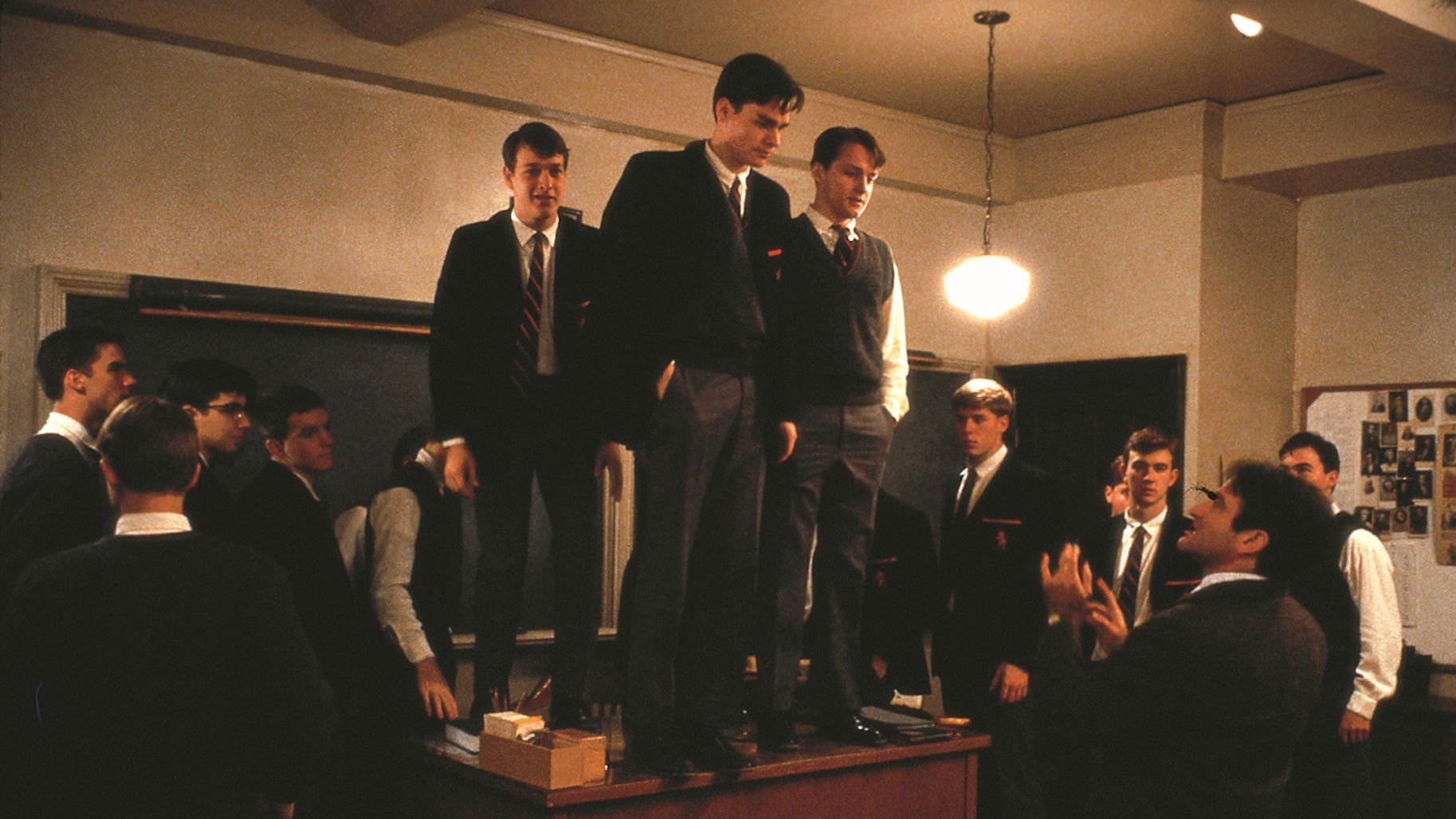
Neil Perry's suicide — after his father withdraws him from Welton to enforce a military career — destroys John Keating. The school needs a scapegoat, and Keating's unorthodox teaching makes him the target. He is fired. But the film's true ending belongs to the boys: in Keating's final classroom visit to collect his belongings, Todd Anderson — the shyest student, who could barely speak at the film's start — climbs onto his desk and salutes: "O Captain! My Captain!" One by one, half the class follows, defying the new headmaster's orders to sit down.
The gesture is the film's thesis made physical. Keating taught them to stand on desks to see the world differently; now they stand on desks to stand by him. Neil's death is not undone and Keating's career is not saved — the ending refuses easy triumph. What survives is the thing Keating actually taught: that a single authentic act of courage matters more than institutional approval, and that "carpe diem" was never about recklessness but about refusing to live a dictated life.
Box Office
Upon its release in 1989, "Dead Poets Society" quickly became a significant commercial success, exceeding expectations at the box office. The film garnered widespread critical acclaim alongside its strong financial performance. Its impressive earnings cemented its status as a profitable and beloved cinematic venture.
Made on a modest budget for its time, the drama resonated with audiences globally, demonstrating its universal appeal and powerful storytelling. Its box office success further amplified its cultural impact and ensured its longevity in popular culture. This strong commercial showing helped to propel its star Robin Williams further into leading dramatic roles.
The film's financial triumph underscored the public's appetite for thoughtful, character-driven dramas with powerful messages. It proved that intelligent storytelling combined with exceptional performances could capture the hearts and wallets of moviegoers. Its commercial viability undoubtedly contributed to its enduring legacy and subsequent widespread viewership on home video.
Awards
"Dead Poets Society" received significant recognition from critics and award bodies, most notably at the Academy Awards. The film secured an Oscar for Best Original Screenplay, an honor that justly celebrated Tom Schulman's insightful and evocative writing. This award highlighted the film's narrative strength and thematic depth.
In addition to its Oscar win, the movie garnered nominations in several other prestigious categories, including Best Picture, Best Director for Peter Weir, and Best Actor for Robin Williams. These nominations underscored the film's overall artistic excellence and the powerful contributions of its key creative talents. The nominations affirmed its status as a critically acclaimed work.
The film also received accolades from the British Academy Film Awards (BAFTA), winning Best Film and Best Director. Its strong showing across various awards ceremonies cemented its reputation as one of the standout films of 1989. These numerous honors further attest to the movie's profound impact and lasting appeal within cinematic history.
Who Should Watch This Movie?
"Dead Poets Society" is an essential watch for anyone who appreciates a powerful, character-driven drama that explores profound themes. Students and educators, in particular, will find its examination of teaching methods and the pursuit of knowledge incredibly thought-provoking and inspiring. It's a film that sparks discussion.
Those who enjoy coming-of-age stories that delve into self-discovery, rebellion, and the challenges of societal expectations will be deeply moved. If you seek a movie that encourages critical thinking, individuality, and the courage to forge your own path, this film is tailor-made for you. It appeals to a broad audience looking for substance.
Fans of Robin Williams will witness one of his most iconic and emotionally resonant performances, showcasing his extraordinary dramatic range. Ultimately, anyone looking for a film that champions the human spirit, the power of words, and the importance of seizing the moment will find "Dead Poets Society" to be an unforgettable experience. It's a timeless classic for all.
Frequently Asked Questions
What is the main message of "Dead Poets Society"?
The core message of "Dead Poets Society" is to 'Carpe Diem,' or 'seize the day,' encouraging individuals to live life to the fullest. It champions individuality, self-expression, and the courage to challenge conventional norms. The film highlights the importance of finding one's unique voice and pursuing personal passions.
Who plays the lead role in "Dead Poets Society"?
The iconic lead role of John Keating, the unconventional English teacher, is played by the brilliant Robin Williams. His performance is widely regarded as one of his most memorable and impactful dramatic portrayals. Williams brings a unique blend of humor and heartfelt sincerity to the character.
Is "Dead Poets Society" based on a true story?
While the film's themes and setting are deeply resonant, "Dead Poets Society" is not directly based on a single true story. The screenplay, written by Tom Schulman, draws inspiration from his own experiences at an independent boys' school, creating a fictional narrative with universal appeal. It captures a sense of realism.
What kind of movie is "Dead Poets Society"?
"Dead Poets Society" is primarily a drama film, often categorized as a coming-of-age story. It explores themes of education, mentor-mentee relationships, and the search for identity within a restrictive environment. It's a thought-provoking and emotionally rich cinematic experience.
Why is "Dead Poets Society" considered a classic?
"Dead Poets Society" is considered a classic due to its powerful storytelling, unforgettable performances, and enduring themes. Its message of individuality, the pursuit of passion, and the impact of a truly inspiring teacher resonates across generations. The film's critical acclaim and timeless relevance secure its place as a cinematic classic.
Where to Watch Dead Poets Society (1989)
Streaming availability changes often — services add and remove titles every month, so we don't publish a fixed list here.
Check current US streaming, rental & purchase options on JustWatch →
JustWatch is an independent streaming guide. We don't track real-time availability ourselves.
Official Trailer
Related Movies
Conclusion
"Dead Poets Society" remains a poignant and powerful cinematic experience, resonating with audiences worldwide more than three decades after its initial release. Its enduring message of 'Carpe Diem' continues to inspire individuals to live fully and authentically. The film truly captures the universal struggle between conformity and individual expression.
Through Robin Williams' unforgettable performance and a compelling narrative, the movie encourages viewers to question, to create, and to find their own unique voice in the world. It’s a testament to the profound impact a single teacher can have on the lives of his students. The film holds a special place in the hearts of many.
This dramatic masterpiece transcends its boarding school setting to deliver universal truths about life, dreams, and the pursuit of passion. "Dead Poets Society" is not merely a film; it is a timeless call to action, reminding us all to make our lives extraordinary. It continues to be celebrated as a profound and essential work of cinema.
Learn more about Dead Poets Society on
Official TMDb Page
.