

Judgment at Nuremberg (1961)
⭐ IMDb Rating: 8.3
🎭 Genre: Drama, History, War
⏱ Runtime: 179 min
🎬 Director: Stanley Kramer
📅 Released: 18 Dec 1961
🌍 Country: United States
Introduction
Stanley Kramer's 1961 cinematic achievement, "Judgment at Nuremberg," stands as a monumental historical drama that continues to resonate with audiences today. This powerful film delves into the profound complexities of justice and moral responsibility in the aftermath of World War II. It explores the ethical dilemmas faced by individuals caught in the machinery of a destructive regime, offering a searing examination of human complicity.
From its release, the film was lauded for its unflinching portrayal of the Nuremberg trials, bringing to the forefront difficult questions about collective guilt and individual accountability. Its enduring relevance makes it a timeless classic, inviting viewers to reflect on universal themes that transcend its specific historical setting.
The film masterfully blends historical accuracy with deeply personal narratives, creating a compelling experience. It challenges perceptions and encourages introspection, cementing its place as an essential piece of cinematic history and a must-watch for those interested in significant historical dramas.
Story
Set in 1948 Nuremberg, the narrative unfolds around an American military tribunal tasked with trying four German judges and prosecutors for war crimes. These legal professionals are accused of endorsing and enforcing Nazi atrocities, raising profound questions about the nature of justice.
The story centers on Chief Judge Dan Haywood, who grapples with the immense moral weight of judging men who claim they were simply following the law. The proceedings reveal a spectrum of human behavior, from defiant adherence to ideology to agonizing regret.
Without revealing specific plot points, the film masterfully navigates the intricate arguments presented by both the prosecution and defense. It highlights the devastating impact of legal systems corrupted by political power and the struggle to uphold human decency in the face of extremism. The film brilliantly captures the tension and intellectual gravity of these historical trials.
Main Cast

Spencer Tracy
Dan Haywood

Richard Widmark
Tad Lawson

Maximilian Schell
Hans Rolfe

Burt Lancaster
Ernst Janning

Marlene Dietrich
Mrs. Bertholt

Judy Garland
Irene Hoffman Wallner

Montgomery Clift
Rudolph Petersen

William Shatner
Harrison Byers
Movie Information
| IMDb Rating | 8.3 |
| Genre | Drama, History, War |
| Runtime | 179 min |
| Director | Stanley Kramer |
| Writer | Abby Mann, Montgomery Clift |
| Actors | Spencer Tracy, Burt Lancaster, Richard Widmark |
| Language | English, German |
| Country | United States |
| Awards | Won 2 Oscars. 16 wins & 26 nominations total |
| Released | 18 Dec 1961 |
Cast Performance
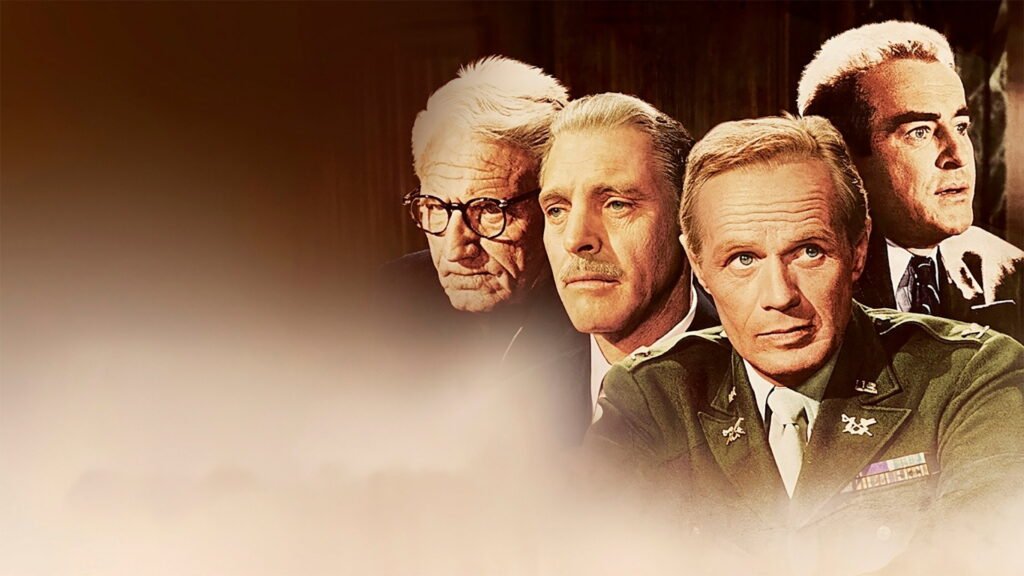
The ensemble cast of "Judgment at Nuremberg" delivers an acting masterclass, elevating the film's powerful script with nuanced and deeply affecting portrayals. Spencer Tracy leads with quiet authority as Chief Judge Dan Haywood, embodying the struggle for impartial justice.
Maximilian Schell's electrifying performance as the defense attorney, Hans Rolfe, justly earned him an Academy Award, showcasing his character's brilliant yet morally ambiguous arguments. His commanding presence dominates the courtroom scenes.
The film also features unforgettable appearances by Burt Lancaster, Richard Widmark, Marlene Dietrich, Judy Garland, and Montgomery Clift, each bringing significant depth to their roles. Their combined talents create a tapestry of human experience, making the moral and ethical conflicts profoundly palpable and immensely impactful. Every actor contributes to the film’s powerful emotional resonance.
Cinematography
The cinematography in "Judgment at Nuremberg," presented in striking black and white, plays a crucial role in establishing the film's somber and intense atmosphere. Director Stanley Kramer, alongside cinematographer Ernest Laszlo, utilized this aesthetic choice to underscore the gravity of the proceedings.
Close-ups on the faces of the defendants, witnesses, and judges emphasize the emotional toll and intellectual struggle inherent in the trials. The stark contrasts of light and shadow create a dramatic visual landscape that mirrors the moral ambiguity explored in the narrative.
The camera work often employs static, deliberate framing that gives the courtroom a theatrical stage-like quality, allowing the powerful dialogue and performances to take center stage. This thoughtful visual approach enhances the film's timeless quality and ensures its thematic weight is felt with every frame, drawing the viewer deeply into the historical moment.
Soundtrack
The musical score for "Judgment at Nuremberg," composed by the esteemed Ernest Gold, provides a powerful yet understated accompaniment to the film's intense drama. Gold’s work, for which he received an Academy Award nomination, perfectly complements the serious tone without ever overpowering the narrative.
The score subtly underscores the emotional gravitas of the courtroom proceedings, building tension and evoking introspection through its melodic structure. It often features somber, reflective motifs that enhance the film’s themes of justice, guilt, and moral reckoning.
Rather than grand orchestral statements, the music often serves as a quiet, thoughtful presence, allowing the performances and dialogue to carry the primary emotional weight. This careful balance ensures the soundtrack amplifies the film's impact, contributing significantly to its lasting power and emotional resonance.
Review
"Judgment at Nuremberg" stands as a compelling and intellectually rigorous cinematic masterpiece, lauded for its courageous exploration of one of history's most challenging chapters. Critics widely praised Stanley Kramer's direction for its unflinching honesty and meticulous attention to detail.
The film's script, penned by Abby Mann, earned an Academy Award for its insightful dialogue and profound philosophical inquiries. It meticulously dissects the moral arguments surrounding complicity and the responsibility of individuals within oppressive systems.
This historical drama is not merely a recounting of events; it's a profound meditation on justice, conscience, and humanity's capacity for both cruelty and redemption. It remains a critically acclaimed work, challenging audiences to consider complex ethical questions long after the credits roll, cementing its status as a pivotal piece of classic cinema.
Box Office
"Judgment at Nuremberg" proved to be a notable commercial success for its time, especially considering its serious subject matter and substantial running time. Its strong critical reception and prestigious cast undoubtedly contributed to its widespread appeal.
The film resonated with a global audience eager to grapple with the aftermath of World War II and the ethical questions it raised. It demonstrated that audiences were willing to engage with thought-provoking, adult dramas that offered more than mere entertainment.
Its impressive box office performance solidified Stanley Kramer's reputation as a director capable of delivering both critical acclaim and commercial viability with socially conscious films. The film's financial success underscored its widespread cultural impact, demonstrating its ability to capture public attention on a grand scale.
Awards
"Judgment at Nuremberg" received significant recognition during the awards season, solidifying its place as a critically acclaimed and highly respected film. It garnered eleven Academy Award nominations, including Best Picture, a testament to its widespread excellence.
Maximilian Schell rightfully won the Oscar for Best Actor for his powerful and nuanced performance as the defense attorney. Abby Mann also received an Academy Award for Best Adapted Screenplay, acknowledged for his intelligent and thought-provoking script.
The film also achieved success at the Golden Globe Awards, earning additional accolades. These prestigious awards underscore the film's profound impact and the exceptional talent involved in its creation, reinforcing its status as a landmark in cinematic history and a truly significant production.
Who Should Watch This Movie?
Anyone interested in gripping courtroom dramas, historical events, and films that provoke deep thought should absolutely watch "Judgment at Nuremberg." It offers a vital look into the complexities of post-World War II justice and human behavior under duress.
History enthusiasts, particularly those fascinated by the Nuremberg trials or the broader context of World War II, will find the film's detailed and dramatic portrayal immensely rewarding. Legal professionals and students will also appreciate its intricate exploration of law, ethics, and moral responsibility.
Fans of classic cinema, strong ensemble casts, and films with lasting intellectual weight will discover a truly powerful and unforgettable experience. This film is perfect for viewers who seek more than entertainment, desiring a cinematic journey that challenges and enriches.
Frequently Asked Questions
What kind of movie is "Judgment at Nuremberg"?
"Judgment at Nuremberg" is a powerful courtroom drama and historical film. It explores the moral and ethical complexities surrounding the trials of Nazi judges after World War II, focusing on themes of justice, responsibility, and human complicity.
Is "Judgment at Nuremberg" based on real events?
Yes, the film is inspired by the actual Judges' Trial (United States of America v. Josef Altstötter, et al.), one of the subsequent Nuremberg trials conducted by the U.S. military after the main International Military Tribunal.
What makes the acting in the film stand out?
The film features an exceptional ensemble cast, including Spencer Tracy, Maximilian Schell (who won an Oscar for his role), Burt Lancaster, and Judy Garland. Their performances are lauded for their depth, emotional power, and nuanced portrayals of complex characters grappling with profound moral dilemmas.
How long is "Judgment at Nuremberg"?
"Judgment at Nuremberg" has a runtime of approximately 2 hours and 59 minutes (179 minutes). Despite its length, critics and audiences often find the compelling narrative and powerful performances make it a thoroughly engaging viewing experience.
Why is "Judgment at Nuremberg" still relevant today?
The film's exploration of justice, individual responsibility within oppressive systems, and the struggle to uphold moral principles remains highly relevant. It prompts ongoing reflection on human rights, the rule of law, and the dangers of blind obedience, making its themes timeless.
Official Trailer
You May Also Like

The Boy and the Wind
1967
⭐ 8.0

Heart Blackened
2017
⭐ 6.9
Člny proti prúdu
1982
⭐ 0.0
Black Crown
1951
⭐ 5.4
Citizen Kane
1941
⭐ 8.0
Metropolis
1927
⭐ 8.1
Related Movies
Conclusion
"Judgment at Nuremberg" remains a towering achievement in cinematic history, a film that continues to challenge and captivate viewers over six decades after its release. Stanley Kramer’s masterful direction, combined with an unparalleled ensemble cast, delivers a story of immense moral weight and enduring relevance.
Its exploration of accountability, conscience, and justice in the face of unspeakable atrocities ensures its place as more than just a historical drama; it is a timeless inquiry into the human condition. The film serves as a powerful reminder of the importance of vigilance and critical thinking in any society.
This classic stands as an essential viewing experience, prompting crucial discussions about history, law, and our individual roles within the larger tapestry of humanity. It’s a film that stays with you, fostering reflection long after the final credits roll, making it a profound and unforgettable cinematic journey.
Learn more about Judgment at Nuremberg on
Official TMDb Page
.