

Modern Times (1936)
⭐ IMDb Rating: 8.5
🎭 Genre: Comedy, Drama, Romance
⏱ Runtime: 87 min
🎬 Director: Charles Chaplin
📅 Released: 25 Feb 1936
🌍 Country: United States
Introduction
Charlie Chaplin's "Modern Times" stands as a monumental achievement in cinematic history, a profound and uproariously funny commentary on the industrial age. Released in 1936, this iconic film showcases Chaplin's unparalleled genius as both a filmmaker and performer. It masterfully blends slapstick comedy with poignant social critique, cementing its place as an enduring classic.
"Modern Times" transcends its era, offering observations about technology, labor, and human dignity that remain strikingly relevant today. The film serves as a bridge between the silent era and the burgeoning age of talkies, featuring synchronized sound effects and music while largely preserving Chaplin's signature pantomime. It's a timeless work that continues to captivate audiences worldwide.
This masterpiece explores the struggles of the working class against the backdrop of an increasingly mechanized world. Chaplin’s character, the Little Tramp, navigates the complexities of a society obsessed with efficiency, often with hilarious and heartbreaking results. His journey reflects universal themes of survival, love, and the pursuit of happiness amidst adversity.
Story
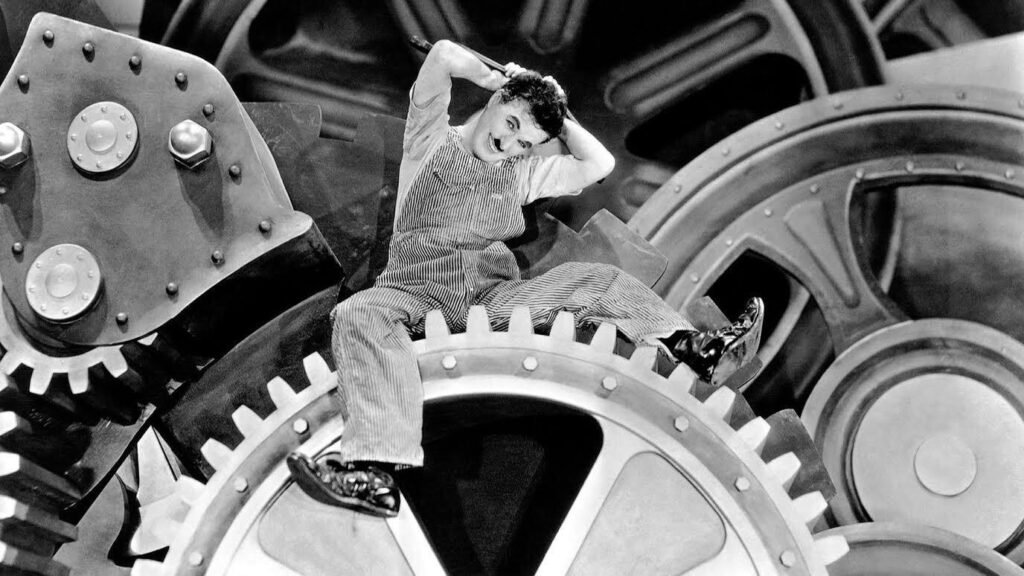
The narrative of "Modern Times" follows the misadventures of the Little Tramp as he strives to survive in an industrialized society. He initially works on an assembly line, performing monotonous and frantic tasks that push him to the brink. This experience highlights the dehumanizing effects of factory work and the relentless pace of modern production.
After a series of comical mishaps, the Tramp finds himself entangled in various unfortunate circumstances, from prison to unemployment. His path soon crosses with a young, impoverished orphan girl, known as the Gamin, and together they seek a better life. Their shared struggles create a heartwarming bond.
Their quest for stability and happiness leads them through different jobs and encounters, always striving to escape the harsh realities of poverty. The film cleverly uses their journey to expose the societal inequalities and the challenges faced by ordinary people during the Great Depression. It's a story of resilience and hope against formidable odds.
Main Cast

Charlie Chaplin
The Tramp (A Factory Worker)

Paulette Goddard
A Gamin

Henry Bergman
Cafe Proprietor

Tiny Sandford
Big Bill

Chester Conklin
Mechanic

Hank Mann
Burglar

Stanley Blystone
Gamin's Father

Al Ernest Garcia
President of the Electro Steel Corp.
Movie Information
| IMDb Rating | 8.5 |
| Genre | Comedy, Drama, Romance |
| Runtime | 87 min |
| Director | Charles Chaplin |
| Writer | Charles Chaplin |
| Actors | Charles Chaplin, Paulette Goddard, Henry Bergman |
| Language | English |
| Country | United States |
| Awards | 6 wins & 1 nomination total |
| Released | 25 Feb 1936 |
Cast Performance
Charlie Chaplin's performance as the Little Tramp in "Modern Times" is nothing short of legendary, a testament to his incredible physical comedy and emotional range. He embodies the character with a perfect blend of innocence, resilience, and an unwavering spirit. His expressive face and signature movements communicate complex emotions and hilarious gags without needing extensive dialogue.
Paulette Goddard, as the Gamin, delivers a captivating performance that perfectly complements Chaplin's character. She portrays her role with a spirited defiance and an underlying vulnerability, making her a compelling figure in her own right. Their on-screen chemistry is palpable, forming the emotional core of the film.
Together, Chaplin and Goddard create a dynamic duo whose interactions drive the film's narrative and emotional depth. Their performances elevate "Modern Times" from a mere comedy to a profound human story. The supporting cast also delivers memorable portrayals, adding to the richness of the film’s world and its memorable characters.
Cinematography
The cinematography in "Modern Times" is a masterclass in visual storytelling, employing black and white film to create a distinct and atmospheric aesthetic. The camera work meticulously captures the sprawling, imposing factory settings, effectively conveying the scale and relentless nature of industrialization. Each frame is thoughtfully composed to enhance both the comedic timing and the dramatic impact.
Chaplin, along with cinematographer Roland Totheroh, utilized innovative camera techniques to achieve many of the film's iconic gags and memorable sequences. The dynamic angles and fluid camera movements contribute significantly to the film’s energetic pace. These visual elements are crucial in portraying the Tramp's struggles and triumphs.
The visual humor is often derived from the precise framing and the clever use of props and sets. From the giant feeding machine to the perilous roller skates scene, the cinematography enhances every moment. The film's enduring visual legacy is a testament to its artistic and technical brilliance, captivating audiences even today.
Soundtrack
"Modern Times" features a wonderfully distinctive soundtrack, primarily composed by Charlie Chaplin himself, which plays a pivotal role in its narrative and emotional resonance. While often classified as a 'silent film,' it ingeniously incorporates synchronized sound effects, music, and some character voices delivered through machines. This unique approach allows the film to bridge eras.
The musical score is vibrant and expressive, perfectly accompanying the Tramp’s antics and enhancing the film’s emotional depth. It ranges from lively, comical tunes that underscore slapstick moments to melancholic melodies that evoke pathos. The music acts as an eloquent narrative voice, guiding the audience through the story.
One of the most memorable aspects is Chaplin's own vocal performance of the nonsensical song 'Titina,' a brilliant comedic highlight. The sound design, though selective, is incredibly effective, emphasizing the clanking machinery and other environmental noises. This innovative use of sound makes the film an auditory as well as a visual delight.
Review
"Modern Times" remains a highly acclaimed cinematic achievement, praised by critics and audiences alike for its timeless humor and poignant social commentary. Many consider it one of Chaplin's finest works, showcasing his unparalleled ability to blend laugh-out-loud comedy with profound observations about humanity. Its enduring relevance is a testament to its genius.
The film masterfully critiques the dehumanizing aspects of industrialization and the economic hardships of the Great Depression, all while maintaining an optimistic spirit. Its blend of physical comedy, satire, and genuine heart makes it incredibly engaging. It continues to spark discussions about progress, labor, and the pursuit of personal freedom.
Its groundbreaking use of sound and its iconic performances further solidify its status as a masterpiece. "Modern Times" is a must-see for anyone interested in film history, classic cinema, or simply a wonderfully crafted story that entertains and provokes thought. It stands as a powerful reminder of Chaplin's lasting impact on the art of filmmaking.
Box Office
Upon its release in 1936, "Modern Times" faced the unique challenge of being largely a silent film in an era dominated by talkies, yet it achieved remarkable commercial success. Despite its unconventional format for the time, audiences flocked to see Chaplin's latest creation. This demonstrated his immense star power and the universal appeal of his storytelling.
The film performed exceptionally well across the globe, especially considering the economic climate of the Great Depression. Its ability to transcend language barriers through visual comedy and universal themes contributed significantly to its international box office appeal. It proved that Chaplin's artistry could still draw crowds, even as the industry rapidly evolved.
"Modern Times" solidified Chaplin's position as one of the most successful and influential figures in Hollywood history. Its financial triumph underscored the enduring power of silent film elements and the genius of its creator. The film's success ensured its place not just in cinematic art but also in commercial achievement.
Awards
"Modern Times," while not recognized by modern awards bodies at the time of its release, garnered immense critical acclaim and cemented Charlie Chaplin’s legacy as a cinematic visionary. The prevailing awards structures during the 1930s were still evolving, making direct comparisons to today's accolades difficult. However, the film's artistic impact was immediately recognized globally.
Its inclusion in numerous 'greatest films' lists and its preservation in national film registries worldwide serve as powerful acknowledgments of its artistic merit. "Modern Times" is consistently celebrated by film historians, critics, and the public for its groundbreaking approach to social commentary and comedy. It has received countless retrospectives and academic studies over decades.
The film’s enduring popularity and its continuous screening in film schools and festivals worldwide highlight its prestigious standing. Chaplin himself was later honored with numerous lifetime achievement awards, often citing works like "Modern Times" as pinnacles of his career. Its real award is its timeless resonance and continuing cultural significance.
Who Should Watch This Movie?
Anyone with an appreciation for classic cinema, especially those interested in the transition from silent films to talkies, should absolutely watch "Modern Times." It offers a fascinating glimpse into a pivotal moment in film history. Fans of Charlie Chaplin's iconic Little Tramp character will find this film to be one of his most compelling and memorable.
If you enjoy films that expertly blend slapstick comedy with sharp social commentary, "Modern Times" is an essential viewing experience. Its satirical look at industrialization and societal pressures remains remarkably relevant today. Comedy lovers will appreciate its ingenious gags and timeless humor.
Moreover, students of film history, sociology, and economics can find rich material within its frames for analysis and discussion. It’s also perfect for anyone seeking a heartwarming story of resilience, friendship, and the eternal human spirit. "Modern Times" truly offers something for everyone, regardless of their usual movie preferences.
Frequently Asked Questions
What is 'Modern Times' primarily about?
'Modern Times' is a comedy-drama that follows Charlie Chaplin's Little Tramp character as he struggles to survive in an industrialized society. It explores themes of factory work, poverty, and the pursuit of happiness amidst societal challenges.
Is 'Modern Times' a silent film?
While it largely relies on visual comedy and pantomime, 'Modern Times' is not strictly a silent film. It features a synchronized musical score, sound effects, and some character voices delivered through machines, making it a unique bridge between silent and talkie eras.
Who directed and starred in 'Modern Times'?
The iconic film 'Modern Times' was both directed by and starred Charlie Chaplin. He also composed the film's memorable musical score, showcasing his multifaceted talent as a filmmaker and artist.
What makes 'Modern Times' relevant today?
'Modern Times' remains relevant today due to its timeless themes of automation, the dehumanizing effects of repetitive labor, and the pursuit of human connection in an increasingly mechanized world. Its social commentary continues to resonate with contemporary audiences.
Who is the female lead in 'Modern Times'?
The female lead in 'Modern Times' is the Gamin, an impoverished orphan girl who befriends the Little Tramp. She is portrayed by Paulette Goddard, whose performance adds significant emotional depth and spirit to the film's narrative.
Official Trailer
You May Also Like
ُُThe Student and the Teacher
1968
⭐ 0.0

El horrible ser nunca visto
1966
⭐ 4.3
The Life and Loves of Beethoven
1937
⭐ 6.8

The Silence of the Lambs
1991
⭐ 8.3
Fargo
1996
⭐ 7.8
The Apartment
1960
⭐ 8.2
Related Movies
Conclusion
"Modern Times" stands as an indelible masterpiece, a brilliant fusion of humor, pathos, and profound social insight that continues to resonate with audiences across generations. Charlie Chaplin's final outing as the Little Tramp is a testament to his unparalleled genius, offering a powerful commentary on the human condition amidst technological change. The film’s blend of comedic brilliance and heartfelt storytelling ensures its place in the pantheon of cinematic classics.
Its innovative use of sound, unforgettable performances, and timeless themes make it a vital piece of film history and a compelling watch even today. "Modern Times" is more than just a movie; it's a cultural touchstone that invites us to reflect on our own relationship with progress, labor, and the enduring quest for human connection. It's an experience that entertains, enlightens, and inspires, solidifying Chaplin's legacy as one of cinema's greatest artists.
This film continues to teach us about the importance of compassion and resilience in an ever-changing world. Its enduring message of hope and the indomitable spirit of humanity ensures its relevance for countless years to come. Do yourself a favor and experience this cinematic marvel.
Learn more on TMDB.