

Taxi Driver (1976)
⭐ IMDb Rating: 8.2
🎭 Genre: Crime, Drama
⏱ Runtime: 114 min
🎬 Director: Martin Scorsese
📅 Released: 09 Feb 1976
🌍 Country: United States
Introduction
Dive into the gritty heart of 1970s New York City with "Taxi Driver" (1976), a monumental film that continues to resonate with audiences worldwide. Directed by the visionary Martin Scorsese and starring an unforgettable Robert De Niro, this psychological drama is more than just a movie; it's a cultural touchstone. Its raw portrayal of urban alienation and a troubled mind cemented its place as a cornerstone of American cinema.
"Taxi Driver" is widely celebrated for its unflinching look at loneliness and disillusionment, masterfully capturing a specific era's zeitgeist. This classic film offers a deep dive into the human psyche, exploring themes that remain incredibly relevant today. Prepare to rediscover why this iconic movie endures as a powerful and essential viewing experience.
Story
At its core, "Taxi Driver" introduces us to Travis Bickle, a lonely and insomniac Vietnam veteran working the night shifts as a taxi driver in New York City. He navigates the city's seedy underbelly, observing the moral decay and urban squalor around him with growing disdain. Travis’s internal monologue provides a stark window into his deteriorating mental state and his increasingly warped perception of justice.
His isolated existence fuels a desperate desire for connection, but his efforts often lead to rejection and further detachment. As his sense of alienation intensifies, Travis begins to formulate a grim and misguided plan to 'clean up' the city he despises. The narrative delves deep into the psychological journey of a man pushed to the brink, offering a disturbing yet compelling character study that challenges viewers to confront uncomfortable truths about society and human nature.
Main Cast

Robert De Niro
Travis Bickle

Jodie Foster
Iris

Cybill Shepherd
Betsy

Harvey Keitel
Sport

Peter Boyle
Wizard

Leonard Harris
Charles Palantine

Albert Brooks
Tom

Diahnne Abbott
Concession Girl
Movie Information
| IMDb Rating | 8.2 |
| Genre | Crime, Drama |
| Runtime | 114 min |
| Director | Martin Scorsese |
| Writer | Paul Schrader |
| Actors | Robert De Niro, Jodie Foster, Cybill Shepherd |
| Language | English, Spanish |
| Country | United States |
| Awards | Nominated for 4 Oscars. 22 wins & 21 nominations total |
| Released | 09 Feb 1976 |
Cast Performance
Robert De Niro delivers one of his most iconic and disturbing performances as Travis Bickle, creating a character steeped in both vulnerability and menace. His portrayal is a masterclass in method acting, showing Travis's descent into paranoia with chilling conviction. De Niro's nuanced expressions and mannerisms perfectly encapsulate the character's internal turmoil.
Jodie Foster, at a remarkably young age, shines as Iris, a streetwise teenager whose path tragically crosses Travis's. Her mature and authentic performance earned her an Academy Award nomination, leaving an indelible mark on cinematic history. Cybill Shepherd brings a complex elegance to Betsy, the campaign worker Travis attempts to court, while Harvey Keitel provides a memorable turn as Sport, adding another layer of the city's grim reality to the film's rich tapestry of characters. Each actor contributes significantly to the film's powerful emotional impact.
Cinematography
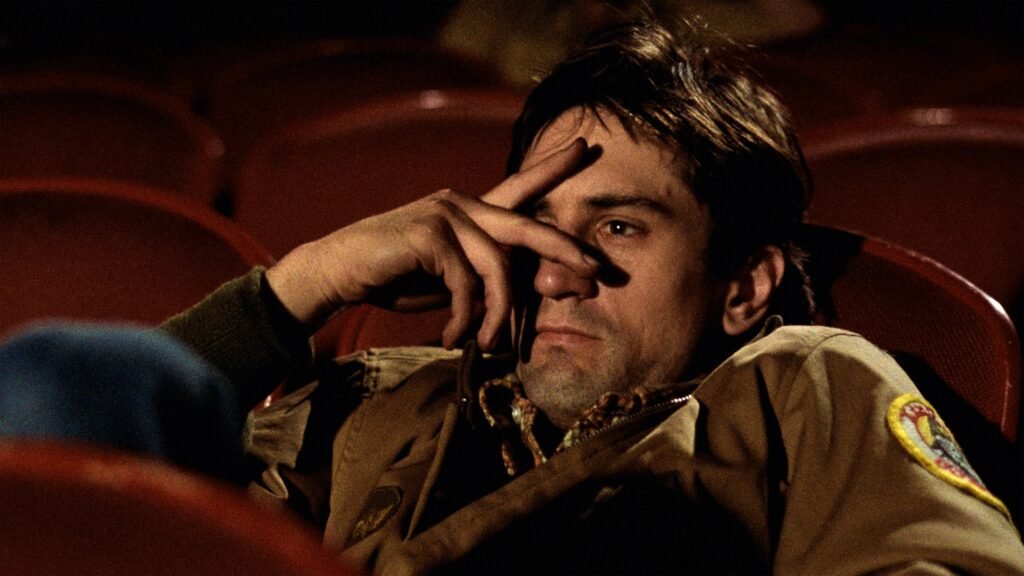
The visual language of "Taxi Driver" is as impactful as its narrative, expertly crafted by cinematographer Michael Chapman. His gritty and atmospheric camerawork transforms New York City into a character itself, capturing its neon-lit nights and grimy streets with stark realism. The cinematography brilliantly reflects Travis Bickle's fragmented perception of the world.
Chapman utilized a distinct color palette, often bathing scenes in oppressive reds or melancholic blues to mirror Travis's escalating psychological state. Close-ups emphasize De Niro's intense performance, drawing viewers deeper into Travis's isolated perspective. This visual mastery effectively immerses the audience in the unsettling, claustrophobic world through which Travis moves, making the film's urban environment feel palpable and deeply unsettling.
Soundtrack
Bernard Herrmann's masterful and melancholic score for "Taxi Driver" is one of the most celebrated in film history, proving to be his final cinematic work. The jazz-infused soundtrack perfectly underscores Travis Bickle's profound sense of isolation and the film's brooding atmosphere. Its haunting saxophone melodies evoke a deep sense of urban loneliness and despair.
Herrmann's score is not merely background music; it actively participates in the storytelling, guiding the audience through Travis's complex emotional landscape. The music shifts from somber and reflective to tense and foreboding, mirroring the protagonist's unpredictable mental state. This iconic score elevates the film's psychological depth, cementing its status as an indispensable component of "Taxi Driver's" enduring legacy and impact.
Review
"Taxi Driver" was met with widespread critical acclaim upon its release, lauded for its bold storytelling and powerful performances. Critics praised Martin Scorsese's fearless direction and Paul Schrader's incisive screenplay, which together dared to explore the dark undercurrents of urban society. The film's uncompromising vision sparked considerable discussion and analysis, a testament to its profound themes.
Its unflinching depiction of alienation, mental illness, and moral ambiguity solidified its status as a provocative and enduring work. "Taxi Driver" is often cited as a prime example of 1970s American cinema, capturing the post-Vietnam disillusionment with striking clarity. Today, it remains a cinematic masterpiece, frequently appearing on 'greatest films of all time' lists for its innovative storytelling and lasting cultural resonance.
Box Office
Despite its dark and controversial subject matter, "Taxi Driver" proved to be a significant commercial success at the box office. Produced on a modest budget, the film garnered considerable earnings, demonstrating its broad appeal beyond niche art-house audiences. Its strong performance underscored the public's appetite for challenging and critically acclaimed cinema.
The film's initial theatrical run captivated moviegoers, drawing them into its intense psychological narrative. This financial achievement helped solidify Martin Scorsese's reputation as a major directorial talent capable of both artistic integrity and commercial viability. Its impressive box office take further contributed to its legendary status, proving that profound storytelling could also be widely embraced by mainstream audiences.
Awards
"Taxi Driver" received substantial recognition from prestigious film institutions and festivals, cementing its place in cinematic history. Most notably, the film was awarded the coveted Palme d'Or at the 1976 Cannes Film Festival, a high honor that immediately propelled it into international prominence. This celebrated prize underscored its artistic merit and global impact.
The film also earned four Academy Award nominations, including Best Picture, Best Actor for Robert De Niro, Best Supporting Actress for Jodie Foster, and Best Original Score for Bernard Herrmann. These nominations highlighted the exceptional quality across its various departments, from direction and acting to its unforgettable musical accompaniment. Its critical accolades continue to reaffirm its enduring importance.
Who Should Watch This Movie?
Anyone with an appreciation for seminal American cinema or psychological dramas should undoubtedly experience "Taxi Driver." It's an essential watch for film students and cinephiles eager to understand the evolution of filmmaking and powerful character studies. Viewers who enjoy gritty realism and challenging narratives will find themselves deeply immersed in its world.
If you're drawn to explorations of urban decay, alienation, and the human psyche, this film offers an unparalleled journey. It's particularly recommended for those interested in the works of Martin Scorsese and Robert De Niro, showcasing some of their most iconic early collaborations. Prepare for a thought-provoking and intense viewing experience that stays with you long after the credits roll.
Frequently Asked Questions
What is "Taxi Driver" primarily about?
"Taxi Driver" is primarily a psychological drama about Travis Bickle, a lonely and disturbed Vietnam veteran working as a taxi driver in New York City. The film explores his growing disillusionment with society and his descent into a dangerous obsession with 'cleaning up' the city's perceived moral decay.
Who directed "Taxi Driver" and who wrote the screenplay?
The iconic film "Taxi Driver" was directed by the acclaimed filmmaker Martin Scorsese. The powerful and influential screenplay was penned by Paul Schrader, who drew inspiration from his own experiences with loneliness and alienation in New York City.
How old was Jodie Foster when she filmed "Taxi Driver"?
Jodie Foster was only 12 years old when she began filming her groundbreaking role as Iris in "Taxi Driver." She was 14 when the film was released, and her mature performance earned her an Academy Award nomination for Best Supporting Actress.
What makes "Taxi Driver" a critically acclaimed film?
"Taxi Driver" is critically acclaimed for its bold direction by Martin Scorsese, Robert De Niro's electrifying performance, and Paul Schrader's unflinching screenplay. It's praised for its psychological depth, atmospheric cinematography, and Bernard Herrmann's iconic score, all contributing to its status as a cinematic masterpiece examining urban alienation.
Is "Taxi Driver" considered a true story?
While "Taxi Driver" is not based on a specific true story, screenwriter Paul Schrader drew inspiration from real-life events and his own personal feelings of isolation while living in New York City. The character of Travis Bickle and some plot elements were also loosely influenced by the diaries of Arthur Bremer, who attempted to assassinate George Wallace in 1972.
Official Trailer
You May Also Like

Nine 1/2 Weeks
1986
⭐ 6.1
The Principal
1987
⭐ 6.4

Premonition
2007
⭐ 6.3

Rescue Dawn
2007
⭐ 7.0

The Salvation
2014
⭐ 6.5

Peacock Alley
1930
⭐ 5.0
Related Movies
Conclusion
"Taxi Driver" stands as a towering achievement in film, a relentless and captivating exploration of urban decay and individual psyche. Martin Scorsese's directorial prowess, coupled with Robert De Niro's unforgettable performance, created a movie that continues to provoke, challenge, and inspire. Its lasting legacy is a testament to its profound impact on cinema and culture.
This iconic 1976 classic remains as relevant today as it was nearly five decades ago, prompting discussions about loneliness, societal responsibility, and the nature of vigilante justice. To watch "Taxi Driver" is to confront a disturbing yet brilliant reflection of humanity's darker corners, ensuring its place as a truly timeless and essential cinematic experience.
Learn more about Taxi Driver on
Official TMDb Page
.