Bicycle Thieves (1948) Movie Guide | Cast, Story, Review, Ending Explained & Where to Watch


Bicycle Thieves (1948)
⭐ IMDb Rating: 8.2
🎭 Genre: Drama
⏱ Runtime: 89 min
🎬 Director: Vittorio De Sica
📅 Released: 13 Dec 1949
🌍 Country: Italy
Introduction
Stepping back in time to post-war Italy, we encounter a cinematic masterpiece that profoundly shaped the landscape of world cinema. Vittorio De Sica's "Bicycle Thieves," originally titled "Ladri di biciclette," stands as a towering achievement of the Italian Neorealism movement.
This 1948 drama offers a poignant and unflinching look at the struggles of ordinary people striving for dignity amidst economic hardship. Its enduring power lies in its simple yet profoundly human story, resonating with audiences across generations and cultures.
The film transcends its specific historical context, delivering a universal narrative about hope, despair, and the complex moral choices faced when survival is at stake. Join us as we explore the lasting legacy and artistic brilliance of this iconic motion picture.
Story
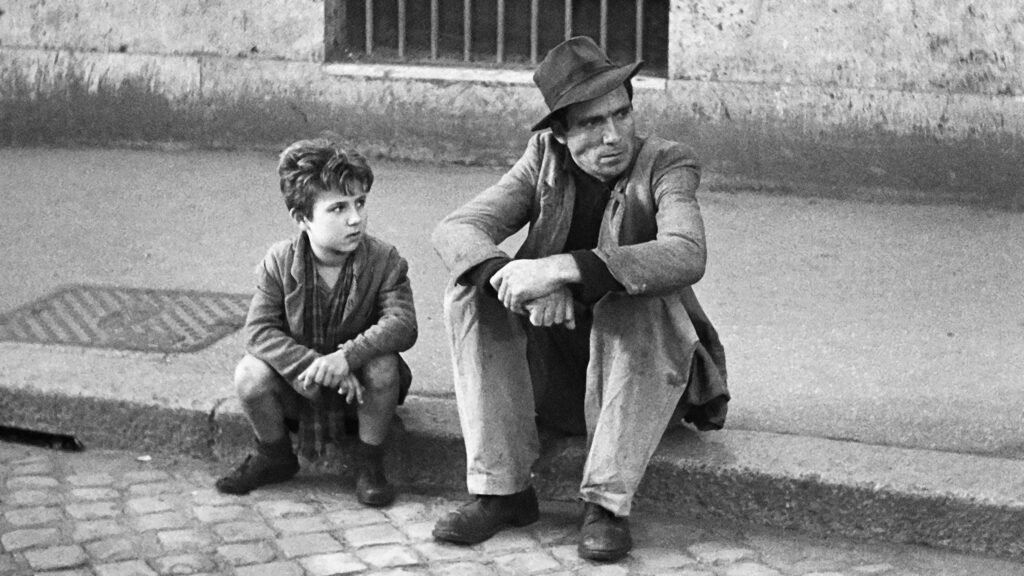
The narrative of "Bicycle Thieves" centers on Antonio Ricci, a man desperate to provide for his family in a poverty-stricken Rome. He finally secures a job posting bills, a position that crucially requires a bicycle for transportation.
His wife pawns their bedsheets to retrieve their own bicycle from a pawn shop, a moment charged with both hope and sacrifice. However, on his very first day of work, disaster strikes, and his essential bicycle is stolen.
What unfolds is Antonio's frantic and often heartbreaking search through the sprawling, indifferent city, accompanied by his young son, Bruno. Their quest becomes a vivid exploration of human resilience and the harsh realities of post-war existence.
Main Cast

Lamberto Maggiorani
Antonio

Enzo Staiola
Bruno

Lianella Carell
Maria

Gino Saltamerenda
Baiocco

Vittorio Antonucci
Alfredo Catelli, The Thief

Giulio Chiari
The Beggar

Elena Altieri
The Charitable Lady
Carlo Jachino
A Beggar
Movie Information
| IMDb Rating | 8.2 |
| Genre | Drama |
| Runtime | 89 min |
| Director | Vittorio De Sica |
| Writer | Cesare Zavattini, Luigi Bartolini, Oreste Biancoli |
| Actors | Lamberto Maggiorani, Enzo Staiola, Lianella Carell |
| Language | Italian, German |
| Country | Italy |
| Awards | Nominated for 1 Oscar. 18 wins & 1 nomination total |
| Released | 13 Dec 1949 |
Cast Performance
The raw authenticity of "Bicycle Thieves" is largely attributed to its inspired casting of non-professional actors. Lamberto Maggiorani, a factory worker, brings a remarkable everyman quality to the role of Antonio Ricci.
His portrayal is deeply empathetic, capturing the quiet desperation and simple goodness of a man pushed to his limits. Maggiorani's expressive face conveys a world of emotion, from tentative hope to crushing defeat.
Enzo Staiola, as Antonio's young son Bruno, delivers an equally powerful performance with an innocence and world-weariness beyond his years. The natural chemistry between the two anchors the film's emotional core, making their journey incredibly believable and impactful.
Cinematography
The cinematography of "Bicycle Thieves" is a testament to the Neorealist commitment to capturing unvarnished reality. Filmed entirely on location in the war-scarred streets of Rome, it eschews elaborate sets for genuine urban landscapes.
The camera serves as an almost journalistic eye, observing the bustling city and its inhabitants with an objective yet deeply compassionate gaze. This approach immerses viewers directly into the period's atmosphere, highlighting the pervasive poverty and resilience.
Every frame contributes to the film's stark beauty, utilizing natural light and long shots to emphasize the characters' smallness against the vast, indifferent city. The visual style profoundly enhances the narrative's emotional weight and social commentary.
Soundtrack
The musical score for "Bicycle Thieves," composed by Alessandro Cicognini, masterfully complements the film's poignant narrative without ever overpowering it. His compositions are subtle, evocative, and deeply human.
The music often emerges during moments of reflection or mounting tension, providing emotional depth to the silent struggles of Antonio and Bruno. It enhances the pathos of their journey, underscoring their hopes and crushing disappointments.
Cicognini's score avoids grandiosity, opting instead for melodies that feel organic to the story and setting. This delicate balance ensures that the raw authenticity of the film's street-level realism remains front and center, enriching the viewing experience.
Review
"Bicycle Thieves" is not just a film; it is a profound cinematic experience that continues to garner immense critical acclaim. Its masterful blend of realism, emotion, and social commentary has solidified its place as a cornerstone of world cinema.
Critics frequently laud its simplicity and directness, which allows the universal themes of dignity, survival, and paternal love to shine through. The film's ability to evoke deep empathy without resorting to melodrama is a testament to De Sica's vision.
Its influence on countless filmmakers and its consistent ranking among the greatest films ever made attest to its timeless power. "Bicycle Thieves" remains an essential viewing for anyone seeking cinema that reflects the complexities of the human spirit.
Box Office
While precise historical box office figures for "Bicycle Thieves" are challenging to ascertain in modern terms, its impact far transcends mere financial success. The film was a significant cultural phenomenon.
It achieved considerable international distribution and critical recognition, particularly in the United States and across Europe. Its modest budget production saw substantial returns in terms of global influence and prestige.
The true measure of its success lies not in ticket sales, but in its profound cultural ripple effect and its role in defining an entire cinematic movement. "Bicycle Thieves" garnered critical and academic respect that continues to this day.
Awards
"Bicycle Thieves" received widespread international acclaim, earning numerous prestigious awards that cemented its status as a cinematic landmark. It was honored with an Academy Honorary Award in 1950 for being the most outstanding foreign language film released in the United States during 1949.
This recognition highlighted its universal appeal and artistic merit on a global stage. The film also won the Golden Globe Award for Best Foreign Language Film, further underscoring its international impact.
Additionally, it received the British Academy Film Award for Best Film from any Source, affirming its critical triumph. These accolades underscore its enduring legacy and position in film history.
Who Should Watch This Movie?
Anyone with an appreciation for classic cinema and powerful storytelling should experience "Bicycle Thieves." It's an essential watch for students of film history, particularly those interested in Italian Neorealism and its groundbreaking techniques.
Viewers who enjoy character-driven dramas that explore the human condition and societal challenges will find it deeply moving. Its themes of struggle, hope, and the bonds between a father and son are universally relatable.
If you seek a film that challenges you to reflect on empathy, morality, and resilience, "Bicycle Thieves" offers a profound and unforgettable journey. It truly resonates with those who value art that mirrors life's raw realities.
Frequently Asked Questions
What is the main theme of "Bicycle Thieves"?
"Bicycle Thieves" primarily explores themes of poverty, desperation, human dignity, and the unbreakable bond between a father and son. It vividly portrays the struggles of ordinary people in post-war society.
Is "Bicycle Thieves" based on a true story?
While not based on a single true event, "Bicycle Thieves" is deeply rooted in the social realities and widespread hardships of post-World War II Italy. It captures the authentic experiences of many during that period.
Why is "Bicycle Thieves" considered a masterpiece?
It's considered a masterpiece for its groundbreaking use of Italian Neorealism, employing non-professional actors and real locations to tell a deeply human story. Its raw authenticity, emotional depth, and universal themes contribute to its enduring acclaim.
What is Italian Neorealism?
Italian Neorealism was a film movement emerging after WWII, characterized by stories about the working class, filmed on location with non-professional actors. It aimed to depict social realities with an honest, documentary-like approach.
Is "Bicycle Thieves" suitable for all ages?
While it deals with mature themes of poverty and struggle, "Bicycle Thieves" contains no explicit content or violence. It's suitable for older children and teenagers who can understand its serious subject matter and appreciate its historical context.
Official Trailer
You May Also Like

Seize The Day
2009
⭐ 0.0
It Ends with the Taste of Smoke
2013
⭐ 0.0
The Concert
1954
⭐ 6.8

PK
2014
⭐ 7.7

I Was an Adventuress
1940
⭐ 6.5

Vanity Fair
1911
⭐ 9.5
Related Movies
Conclusion
Vittorio De Sica's "Bicycle Thieves" stands as an indelible testament to the power of cinematic realism and humanistic storytelling. Its simple premise belies a profound exploration of dignity, survival, and the intricate fabric of post-war society.
This film continues to resonate because its core message about the struggles of ordinary people, their hopes, and their setbacks, remains timeless. It’s a powerful reminder of how cinema can illuminate the shared human experience.
"Bicycle Thieves" is more than just a classic film; it is a poignant work of art that invites introspection and understanding, leaving an enduring mark on the hearts and minds of all who witness it.
Learn more about Bicycle Thieves on
Official TMDb Page
.