
Schindler’s List (1994) Movie Guide | Cast, Story, Review, Ending Explained & Where to Watch

Schindler's List (1994)
⭐ IMDb Rating: 9.0
🎭 Genre: Biography, Drama, History
⏱ Runtime: 195 min
🎬 Director: Steven Spielberg
📅 Released: 04 Feb 1994
🌍 Country: United States
Introduction
Schindler's List," released in 1994, isn't just a movie; it's a profoundly moving cinematic experience that etched itself into the annals of film history. Directed by the legendary Steven Spielberg, this powerful historical drama transcends typical storytelling, offering an unflinching, yet deeply human, look at one of humanity's darkest chapters. Based on a true story, the film serves as both a somber remembrance and a testament to the extraordinary capacity for courage and compassion in the face of unimaginable evil. Its release marked a pivotal moment, forcing audiences worldwide to confront the horrors of the Holocaust through a lens of artistic mastery and deeply personal narrative. More than a quarter-century later, its emotional resonance and vital message continue to reverberate, solidifying its place not merely as a film, but as an essential historical document rendered with unparalleled cinematic grace. Prepare for a journey that will challenge your perceptions and stay with you long after the credits roll.
Story
At its heart, "Schindler's List" chronicles the astonishing true story of Oskar Schindler, a German businessman who initially arrives in Nazi-occupied Kraków with aspirations of profiting from the war. Portrayed with immense complexity, Schindler leverages his charm and connections to establish a factory, employing Jewish workers from the local ghetto, primarily for their low cost. However, as the Nazi regime's brutality intensifies and the systematic extermination of Jews becomes horrifyingly clear, Schindler's motivations undergo a profound and transformative shift. What begins as calculated self-interest gradually evolves into an audacious, perilous mission to protect his Jewish employees from the gas chambers. The film meticulously portrays the moral compromises and immense risks Schindler undertakes, operating within the very system he seeks to subvert, illustrating the fine line between complicity and heroic resistance during an era of unparalleled moral ambiguity. It's a gripping narrative of awakening conscience amidst a world gone mad.
Main Cast

Liam Neeson
Oskar Schindler

Ben Kingsley
Itzhak Stern

Ralph Fiennes
Amon Goeth

Caroline Goodall
Emilie Schindler

Jonathan Sagall
Poldek Pfefferberg

Embeth Davidtz
Helen Hirsch

Małgorzata Gebel
Viktoria Klonowska

Shmuel Levy
Wilek Chilowicz
Movie Information
| IMDb Rating | 9.0 |
| Genre | Biography, Drama, History |
| Runtime | 195 min |
| Director | Steven Spielberg |
| Writer | Thomas Keneally, Steven Zaillian |
| Actors | Liam Neeson, Ralph Fiennes, Ben Kingsley |
| Language | English, Hebrew, German, Polish, Latin |
| Country | United States |
| Awards | Won 7 Oscars. 91 wins & 49 nominations total |
| Released | 04 Feb 1994 |
Cast Performance
The emotional core of "Schindler's List" is undeniably anchored by its extraordinary cast, whose performances lend unparalleled depth and authenticity to the harrowing narrative. Liam Neeson delivers a career-defining turn as Oskar Schindler, capturing the character's initial opportunism, his charismatic facade, and his eventual, profound moral transformation with remarkable nuance. Neeson makes Schindler's journey believable, allowing audiences to witness the internal struggle of a man awakening to his humanity. Equally unforgettable is Ralph Fiennes' chilling portrayal of Amon Goeth, the commandant of the Płaszów concentration camp. Fiennes embodies pure, casual evil, crafting a villain of terrifying realism whose actions are both abhorrent and disturbingly human. Completing this powerful trio, Ben Kingsley provides a quiet, steadfast strength as Itzhak Stern, Schindler's Jewish accountant and moral compass. Kingsley’s understated performance grounds the film, representing the quiet dignity and resilience of those targeted for extermination. Together, their collective brilliance elevates the film to an unforgettable level of human drama.
Cinematography
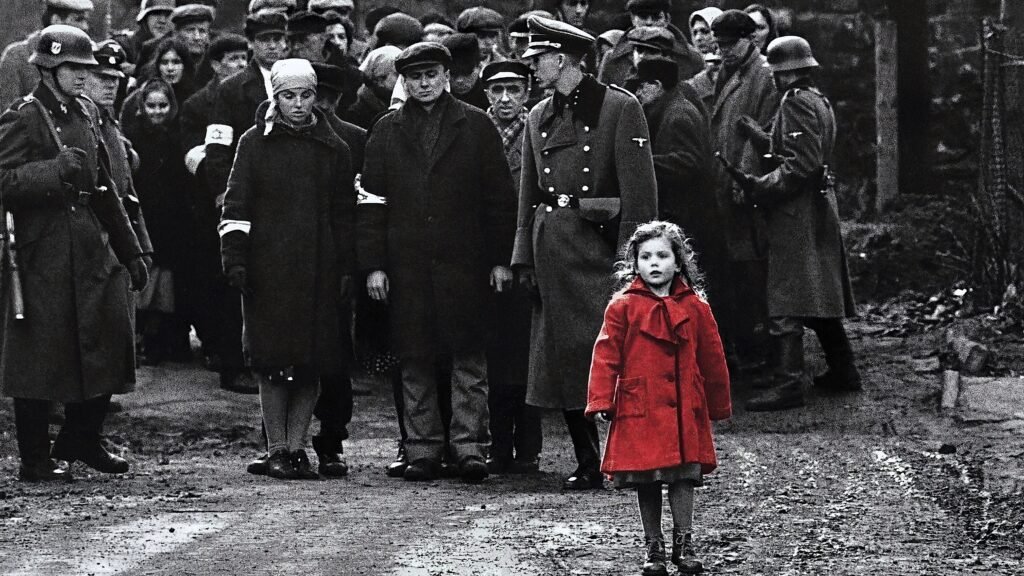
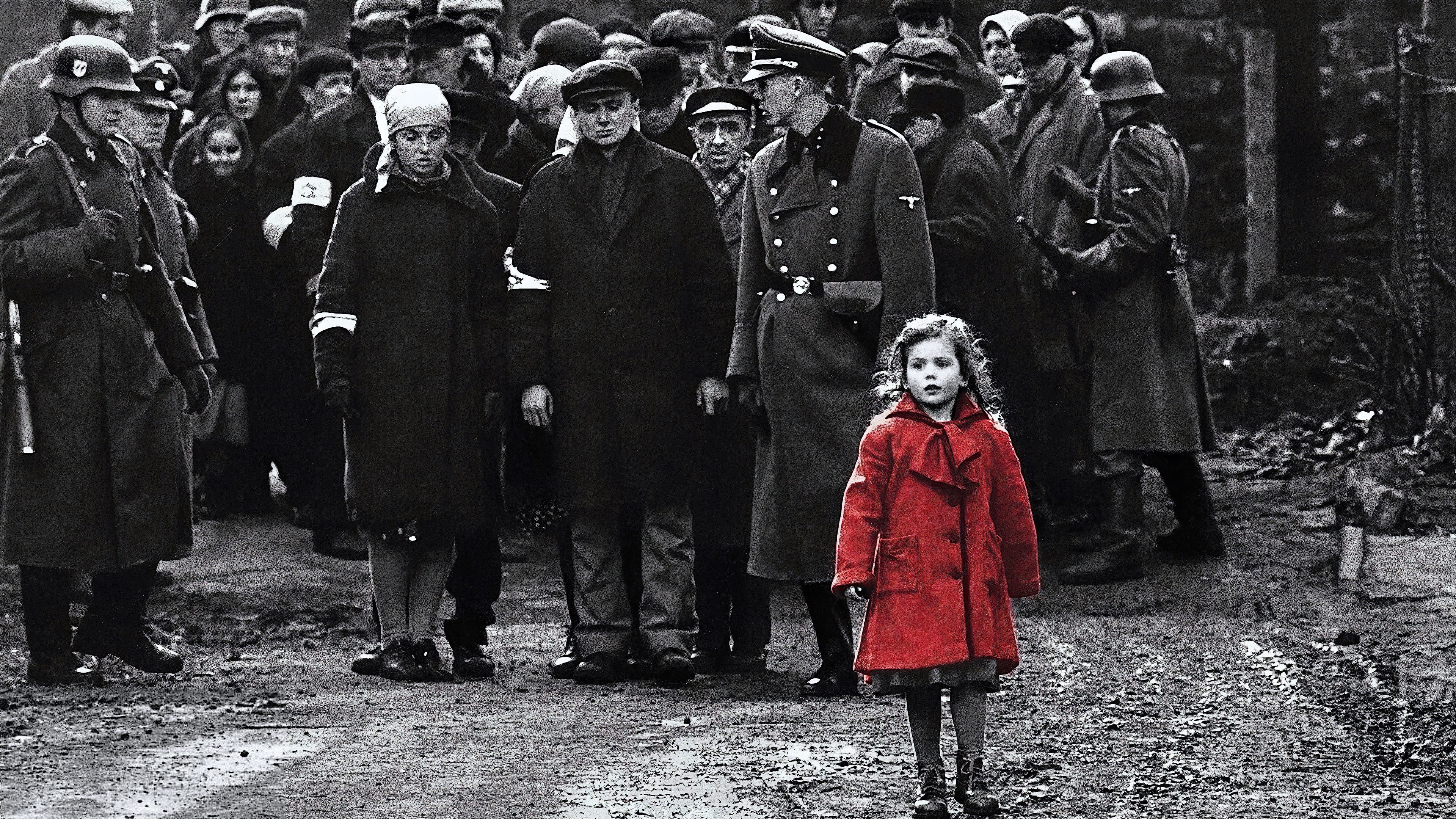
One of the most striking and artistically significant aspects of "Schindler's List" is its masterful black and white cinematography, crafted by Janusz Kamiński. This deliberate artistic choice immediately immerses viewers in the historical period, lending the film a powerful, almost documentary-like authenticity and timeless quality. The absence of color strips away distractions, forcing audiences to focus on the stark realities, the human faces, and the moral choices at play. Kamiński's work is not merely desaturated; it's artfully composed, utilizing deep shadows and sharp contrasts to evoke a sense of grim realism and profound sorrow. The black and white palette amplifies the emotional weight of every scene, making the horrors depicted even more stark and visceral. While predominantly monochrome, a few carefully chosen moments feature a singular splash of color, a decision that has become iconic and serves as a powerful symbol, drawing the viewer's eye to a specific, deeply symbolic detail that resonates long after viewing, underscoring the film's profound message.
Soundtrack
The hauntingly beautiful and deeply melancholic score for "Schindler's List," composed by the legendary John Williams, is inseparable from the film's enduring impact. Eschewing grand, bombastic themes, Williams instead crafts a score that is both understated and profoundly moving, allowing the images and human drama to take center stage while providing an exquisitely sensitive emotional backdrop. The iconic use of the solo violin, performed by Itzhak Perlman, evokes a sense of profound sadness, loss, and fragile hope, becoming the film's signature musical motif. This simple, elegant melody speaks volumes, capturing the unspeakable suffering and the flicker of humanity that persists even in the darkest times. Williams' compositions never overpower the narrative; instead, they deepen the emotional resonance, guiding the audience through moments of despair and courage with delicate precision. It's a masterful example of a film score that not only complements but elevates the storytelling, creating an auditory experience as unforgettable as the visuals.
Review
Schindler's List" stands as a monumental achievement in cinematic history, widely regarded as one of the most important and impactful films ever made. Steven Spielberg tackled one of humanity's most sensitive and horrific events with unprecedented courage, sensitivity, and artistic vision. Critics universally lauded its unflinching portrayal of the Holocaust, its deeply resonant human drama, and its technical brilliance. The film doesn't shy away from the brutality, yet it balances the horror with moments of extraordinary human resilience and unlikely heroism, offering a glimmer of hope amidst despair. Its narrative power lies in its ability to personalize statistics, making the millions lost a tangible, heartbreaking reality through the stories of individuals. "Schindler's List" is more than just a historical drama; it's a vital moral lesson, a call to remembrance, and a testament to the power of one person to make a difference. It's an emotionally taxing but ultimately essential viewing experience that leaves an indelible mark on the viewer's conscience and understanding of history.
Box Office
Despite its somber subject matter, lengthy runtime, and predominantly black and white presentation, "Schindler's List" achieved remarkable commercial success, far exceeding initial expectations for such a challenging historical drama. Produced on a budget of approximately $22 million, the film went on to gross over $322 million worldwide, making it one of the highest-grossing black and white films of all time and a significant financial triumph for director Steven Spielberg and Universal Pictures. Its strong performance at the box office wasn't driven by typical blockbuster appeal but by overwhelming critical acclaim, powerful word-of-mouth, and its profound cultural impact, compelling audiences globally to witness this pivotal historical narrative. The film’s commercial success underscored the public’s willingness to engage with serious, thought-provoking cinema, demonstrating that powerful storytelling, even on difficult subjects, could resonate broadly and achieve significant financial returns.
Awards
Schindler's List" swept the major awards ceremonies, cementing its place as a critically adored masterpiece and a landmark achievement in filmmaking. At the 66th Academy Awards, it received an astonishing twelve nominations and won seven Oscars, including the coveted Best Picture, Best Director for Steven Spielberg, Best Adapted Screenplay, Best Cinematography for Janusz Kamiński, Best Art Direction, Best Film Editing, and Best Original Score for John Williams. These accolades were a powerful recognition of the film's artistic excellence and profound cultural significance. Beyond the Oscars, the film also garnered immense recognition from other prestigious bodies, including seven British Academy Film Awards (BAFTAs), notably Best Film and Best Direction, and three Golden Globe Awards, including Best Motion Picture – Drama. The sheer volume and prestige of these awards underscore the film's universal critical acclaim and its enduring legacy as one of the most honored films in cinematic history.
Who Should Watch This Movie?
Schindler's List" is an indispensable viewing experience, particularly for those who appreciate cinema with profound historical weight and deep emotional resonance. It is highly recommended for history enthusiasts, especially those interested in World War II and the Holocaust, as it offers a deeply human perspective on these events, complementing factual study with powerful storytelling. Educators and students will find it an invaluable resource for understanding the complexities and human cost of persecution. Beyond its historical significance, anyone who values masterfully crafted drama, compelling character studies, and exceptional artistic filmmaking will be captivated. Be prepared for a challenging yet ultimately enriching experience; the film addresses intensely difficult themes but does so with sensitivity and purpose, ultimately offering a message of hope, remembrance, and the profound impact of individual courage. It’s not just a film to watch, but a film to remember and reflect upon.
Frequently Asked Questions
Why is Schindler's List primarily in black and white?
The choice to film "Schindler's List" predominantly in black and white was a deliberate artistic decision by Steven Spielberg and cinematographer Janusz Kamiński. It serves multiple purposes: to evoke a sense of historical authenticity, making the film feel like a documentary from the period; to strip away distractions and focus on the stark realities and human faces; and to create a timeless, classic feel that emphasizes the solemnity and gravity of the subject matter. This aesthetic choice powerfully underscores the somber tone and the brutality of the Holocaust.
Is Schindler's List based on a true story?
Yes, "Schindler's List" is profoundly based on a true story. It is an adaptation of Thomas Keneally's 1982 non-fiction novel "Schindler's Ark," which meticulously documented the true efforts of Oskar Schindler. Schindler was a German industrialist and member of the Nazi Party who, despite his initial opportunistic motives, eventually saved the lives of over 1,200 Jews during the Holocaust by employing them in his factories and bribing Nazi officials. The film strives for historical accuracy in depicting these harrowing events and Schindler's incredible journey.
How long is Schindler's List?
Schindler's List" has a runtime of approximately 3 hours and 15 minutes (195 minutes). This extensive duration allows director Steven Spielberg to fully explore the complex narrative, develop the characters, and immerse the audience in the profound historical context of the Holocaust. While a lengthy film, its critical and emotional impact is often cited as justifying its runtime, ensuring a comprehensive and deeply moving cinematic experience that few other films achieve.
What is the main message of Schindler's List?
The main message of "Schindler's List" is multifaceted, centering on themes of humanity, resilience, redemption, and the individual's capacity to make a profound difference in the face of overwhelming evil. It highlights the importance of bearing witness to history, remembering the victims of atrocity, and recognizing the courage it takes to act morally even in the most perilous circumstances. The film ultimately serves as a powerful reminder of the value of every single life and the enduring human spirit against unimaginable odds, urging viewers to never forget.
Where can I watch Schindler's List?
Schindler's List" is widely available for viewing. You can typically stream it on various subscription platforms, often including services like Peacock, and it may also be available for rent or purchase on digital platforms such as Amazon Prime Video, Apple TV, Google Play, and Vudu. Additionally, physical copies on DVD and Blu-ray are readily available for purchase, allowing you to own this cinematic masterpiece. Availability on specific streaming services can vary by region and over time, so checking current listings is always recommended.
Official Trailer
You May Also Like
Confucius
1940
⭐ 6.5

Tulip Fever
2017
⭐ 6.5
Bonnie Prince Charlie
1923
⭐ 10.0

Happy Face Killer
2014
⭐ 5.2
Walk on Water
2004
⭐ 6.9

A History of Violence
2005
⭐ 7.2
Related Movies
Conclusion
In the annals of cinema, "Schindler's List" stands as a towering achievement, a film that dared to confront the unspeakable and emerged with a masterpiece of remembrance and humanity. Steven Spielberg's magnum opus isn't merely a recounting of history; it's a profound emotional journey that reminds us of the fragility of life, the depths of human cruelty, and the extraordinary power of compassion. Its black and white aesthetic, stirring performances, and poignant score combine to create an experience that transcends entertainment, serving as a vital historical document and a timeless moral imperative. Decades after its release, its message remains as urgent and relevant as ever: to bear witness, to remember the past, and to recognize the potential for good within each of us. "Schindler's List" is not just a film you watch; it's a film you carry with you, a testament to the lives saved and a memorial to those lost, forever echoing the call to never forget. You will also like The return of the king 2003.
For official information check TMDB.