

Dial M for Murder (1954)
⭐ IMDb Rating: 8.1
🎭 Genre: Crime, Drama, Mystery
⏱ Runtime: 105 min
🎬 Director: Alfred Hitchcock
📅 Released: 29 May 1954
🌍 Country: United States
Introduction
Alfred Hitchcock’s 'Dial M for Murder' stands as a quintessential masterclass in cinematic suspense. This 1954 thriller invites audiences into a meticulously crafted world of deception and psychological tension, showcasing the legendary director at the peak of his powers.
Originally presented in groundbreaking 3D, the film brilliantly uses its confined setting to amplify a sense of entrapment. It remains a timeless testament to Hitchcock’s unparalleled ability to manipulate audience expectations and deliver gripping drama.
This iconic picture masterfully blends sophisticated plotting with stellar performances, creating an atmosphere of palpable unease that captivates viewers from beginning to end. It’s a compelling entry in the pantheon of classic thrillers, cementing its place in film history.
Story
The narrative of 'Dial M for Murder' centers on Tony Wendice, a former professional tennis player whose comfortable life is largely funded by his wealthy socialite wife, Margot. Feeling sidelined and suspicious of her past dalliances, Tony meticulously devises what he believes to be the perfect crime.
His elaborate scheme aims to eliminate Margot, thereby securing her fortune and removing her from his life permanently. The film masterfully unravels his intricate planning, slowly building tension as every detail is laid out with chilling precision.
As the plot unfolds, the audience is drawn into a high-stakes game of cat and mouse, where intelligence and deception are the primary weapons. The story explores themes of marital discord, betrayal, and the psychological burden of a meticulously planned act of violence, keeping viewers on the edge of their seats.
Main Cast

Ray Milland
Tony Wendice

Grace Kelly
Margot Wendice

Robert Cummings
Mark Halliday

John Williams
Chief Inspector Hubbard

Anthony Dawson
Charles Swann
Leo Britt
Storyteller

Patrick Allen
Detective Pearson
George Leigh
Detective Williams
Movie Information
| IMDb Rating | 8.1 |
| Genre | Crime, Drama, Mystery |
| Runtime | 105 min |
| Director | Alfred Hitchcock |
| Writer | Frederick Knott |
| Actors | Ray Milland, Grace Kelly, Robert Cummings |
| Language | English |
| Country | United States |
| Awards | Nominated for 1 BAFTA Award. 5 wins & 3 nominations total |
| Released | 29 May 1954 |
Cast Performance
The success of 'Dial M for Murder' owes much to its compelling cast, led by the incomparable Grace Kelly as the elegant and vulnerable Margot Wendice. Her portrayal perfectly captures the character's internal conflict and growing dread, making her a truly sympathetic figure.
Ray Milland delivers a chillingly composed performance as Tony Wendice, the calculating husband. His measured demeanor and deceptive charm make his character a memorable and terrifying villain, a true master manipulator.
Robert Cummings as Mark Halliday, Margot's lover, provides a strong emotional anchor, portraying a man caught in a desperate situation. The synergy among these lead actors creates a powerful dynamic, elevating the film's dramatic intensity and psychological depth.
Cinematography
Hitchcock’s directorial genius is vividly displayed through the cinematography of 'Dial M for Murder,' expertly handled by Robert Burks. The film's visual language is meticulously crafted to enhance its claustrophobic and suspenseful atmosphere, particularly within its single-set apartment.
Burks’ camera work, originally designed for 3D exhibition, uses clever depth and precise framing to create a sense of voyeurism and entrapment. The careful arrangement of props and architectural elements further emphasizes the characters' confined circumstances.
The use of close-ups and deliberate camera movements guides the audience’s attention, heightening moments of tension and revealing subtle emotional cues. This masterful visual storytelling ensures that every frame contributes to the film's pervasive sense of dread and anticipation.
Soundtrack
The original score for 'Dial M for Murder,' composed by the renowned Dimitri Tiomkin, plays a crucial role in shaping the film’s tense atmosphere. Tiomkin’s music is subtly employed, never overpowering the dialogue or visual storytelling, but consistently underpinning the psychological drama.
The orchestral arrangements create an insistent rhythm of suspense, escalating during moments of high tension and providing ominous undertones to seemingly mundane scenes. This musical nuance is a hallmark of classic thrillers, enhancing the audience's emotional connection.
The score effectively punctuates the film's key dramatic beats, adding an extra layer of dread and anticipation without resorting to overt scares. It’s a testament to how sound design can be an invisible yet powerful force in cinematic storytelling, deepening the narrative's impact.
Review
Alfred Hitchcock’s 'Dial M for Murder' remains a timeless cinematic achievement, celebrated for its ingenious plot and relentless suspense. The film is a masterclass in controlled tension, proving that a compelling narrative doesn't need sprawling locations to captivate an audience.
Hitchcock meticulously constructs a psychological labyrinth, where every twist and turn feels both shocking and inevitable. The sharp dialogue and brilliant pacing keep viewers guessing until the very end, solidifying its reputation as a definitive thriller.
Critics and audiences alike have lauded its cleverness and the precision of its execution, making it a staple for anyone studying the art of suspense filmmaking. It’s a remarkable piece of cinema that continues to thrill new generations.
If you enjoyed this film, check out our guides to Rear Window (1954), Vertigo (1958) and Psycho (1960) for more great movie recommendations.
Ending Explained
Spoiler warning: this section describes the final act of Dial M for Murder (1954).
Tony Wendice's perfect murder plot collapses through a chain of small errors. When the hired killer Lesgate (alias Cowan) is instead killed by Margot in self-defense, Tony improvises: he plants Margot's stocking on the dead man, swaps the keys, and manipulates the evidence to frame his wife for murder. But Chief Inspector Hubbard sees through it — the key detail being that Margot's latch key is in Lesgate's pocket, which only makes sense if Tony placed it there after the struggle.
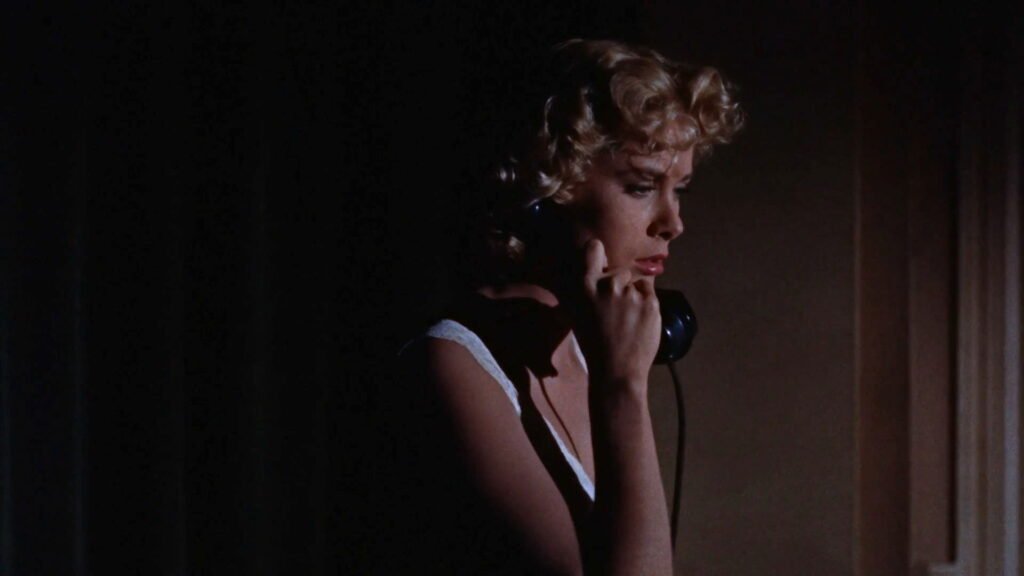
The trap closes when Hubbard has Margot "confess" over the phone while Tony listens from the next room, then produces the decisive evidence: Tony's own coat, containing Margot's key. Realizing he is caught, Tony calmly asks for a drink — and Margot, finally free of him, chooses not to watch him taken away. The final irony Hitchcock lands: the man who planned the perfect crime is undone by his own meticulousness.
Box Office
Upon its release in 1954, 'Dial M for Murder' proved to be a solid commercial success, reinforcing Alfred Hitchcock's reputation as a director capable of delivering both critical acclaim and profitable entertainment. The film’s intriguing premise and star power drew significant audiences.
Its initial presentation in the then-novel 3D format undoubtedly contributed to public curiosity and box office appeal, even though many theaters later screened it in traditional 2D. This technological aspect added an extra layer of allure for moviegoers of the era.
The film’s financial performance cemented its place as a popular entry in Hitchcock's illustrious career. It demonstrated the enduring appeal of sophisticated thrillers and intelligent storytelling to a wide audience.
Awards
'Dial M for Murder' garnered significant critical attention for its masterful direction and gripping narrative, even if it wasn't extensively recognized by major awards bodies of its time. Its true accolades lie in its enduring legacy and cinematic impact.
While specific Oscar or Golden Globe wins were limited, the film is consistently celebrated by critics and film historians as a quintessential example of Hitchcock's genius. Its innovative use of a single setting and intricate plot design have earned it lasting praise.
Its continued inclusion in lists of essential thrillers and classic films stands as a testament to its artistic merit and influence. The film’s enduring popularity and study in film schools speak volumes about its profound contribution to cinema.
Who Should Watch This Movie?
'Dial M for Murder' is an absolute must-watch for aficionados of classic thrillers and anyone captivated by the art of suspense. Fans of Alfred Hitchcock’s distinctive style will find this film to be a prime example of his directorial prowess and psychological depth.
Viewers who appreciate clever, intricate plots and strong character-driven narratives will be thoroughly engaged by its sophisticated storytelling. It’s perfect for those who enjoy mysteries that slowly unravel, challenging the audience to connect the pieces.
Furthermore, aspiring filmmakers and film students will find immense value in studying its masterful cinematography, precise pacing, and the ingenious way suspense is built and maintained within a confined space. It's a timeless cinematic lesson.
Frequently Asked Questions
Is 'Dial M for Murder' a scary movie?
'Dial M for Murder' is not typically classified as a scary movie in the horror sense. Instead, it is a psychological thriller that relies on suspense, tension, and intricate plot twists to captivate its audience, rather than jump scares or graphic content.
What makes 'Dial M for Murder' a classic?
The film is considered a classic due to Alfred Hitchcock's masterful direction, its ingeniously constructed plot, and stellar performances from its cast. It's celebrated for its intense suspense, tight pacing, and innovative use of a limited setting to maximize drama.
Was 'Dial M for Murder' originally in color and 3D?
Yes, 'Dial M for Murder' was notably filmed in Technicolor and originally released in the 3D process. While often viewed in 2D today, its 3D origins influenced its cinematography, particularly in how depth and framing were utilized to enhance the visual experience.
Is 'Dial M for Murder' based on a play?
Yes, the film 'Dial M for Murder' is an adaptation of a successful stage play of the same name by Frederick Knott. Hitchcock stayed very close to the original source material, maintaining much of its dialogue and confined setting.
How does Hitchcock build suspense in the film?
Hitchcock builds suspense through several techniques, including meticulous plotting, slow reveals of information, and the use of confined spaces to create claustrophobia. His masterful camera work, precise editing, and the deliberate pacing of the narrative continually heighten the tension.
Where to Watch Dial M for Murder (1954)
Streaming availability changes often — services add and remove titles every month, so we don't publish a fixed list here.
Check current US streaming, rental & purchase options on JustWatch →
JustWatch is an independent streaming guide. We don't track real-time availability ourselves.
Official Trailer
Related Movies
Conclusion
Alfred Hitchcock’s 'Dial M for Murder' remains an enduring testament to the power of meticulously crafted suspense and brilliant filmmaking. Its tightly woven plot, unforgettable performances, and masterful direction secure its place as a cinematic classic.
The film continues to captivate new generations with its psychological intensity and clever narrative twists, proving that true suspense never truly ages. It's a captivating experience that showcases Hitchcock at the zenith of his abilities.
For anyone seeking a quintessential thriller that blends sophisticated storytelling with relentless tension, 'Dial M for Murder' is an absolute essential. Its legacy as a benchmark in cinematic history is undeniably secure.
Learn more about Dial M for Murder on
Official TMDb Page
.