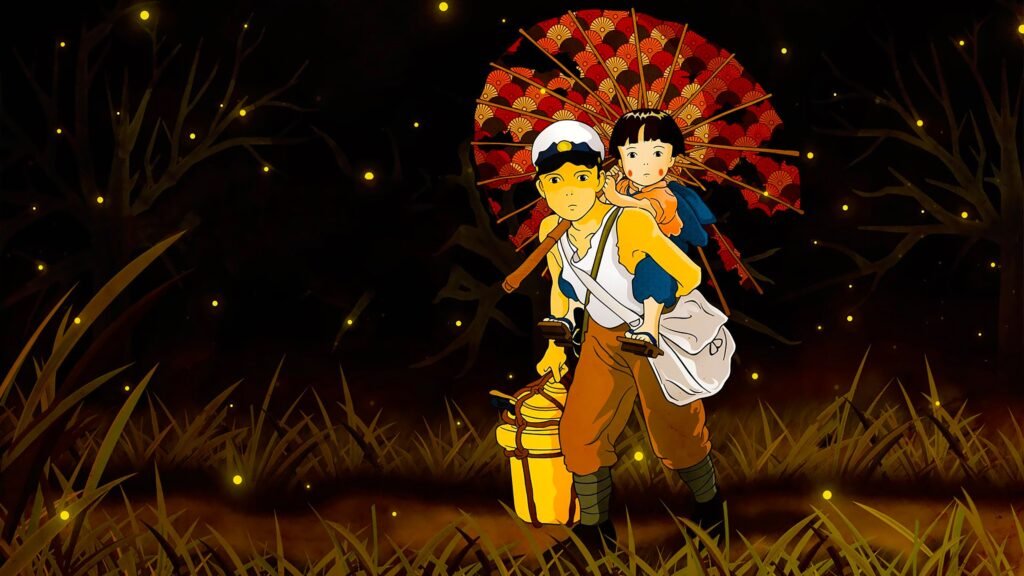
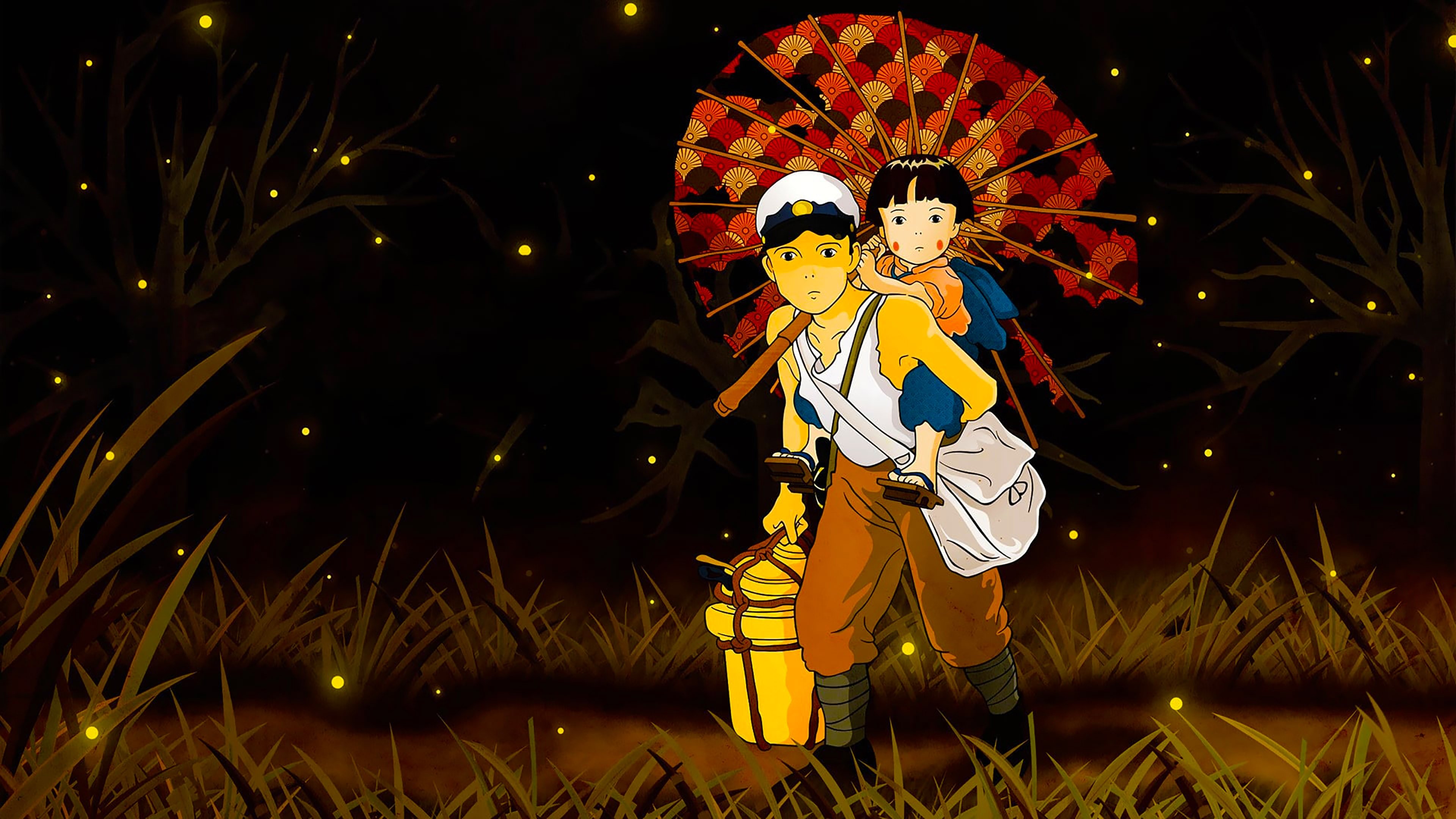

Grave of the Fireflies (1989)
⭐ IMDb Rating: 8.5
🎭 Genre: Animation, Drama, War
⏱ Runtime: 88 min
🎬 Director: Isao Takahata
📅 Released: 26 Jul 1989
🌍 Country: Japan
Introduction
Stepping into the world of Japanese animation, few films resonate with the profound emotional depth and historical weight of Studio Ghibli's "Grave of the Fireflies." Directed by the visionary Isao Takahata and released in 1989, this cinematic masterpiece transcends mere storytelling to offer a deeply moving reflection on the human cost of conflict. Widely regarded as one of the most powerful anti-war films ever made, regardless of genre, it chronicles the harrowing experiences of two siblings struggling to survive during the final months of World War II. Its enduring legacy lies in its unflinching portrayal of innocence confronted by unthinkable hardship, rendered with a beautiful yet devastating artistry that continues to captivate and challenge audiences worldwide. Prepare yourself for a journey that, while heart-wrenching, is ultimately an unforgettable testament to resilience and the fragility of life.
Story
Set against the devastating backdrop of Japan in the summer of 1945, "Grave of the Fireflies" introduces us to Seita, a resourceful teenage boy, and his younger sister, Setsuko. Their lives are irrevocably altered when an American firebombing raid leaves their city in ruins and their home destroyed, forcing them to embark on a desperate quest for survival. Separated from their parents and facing increasingly dire circumstances, Seita strives to protect and care for his beloved sister amidst a world crumbling around them. The film meticulously details their efforts to find food, shelter, and dignity in an environment where resources are scarce and compassion is often overshadowed by individual struggle. Their story is a poignant exploration of independence, sibling bonds, and the heartbreaking challenges faced by civilians caught in the crossfire of a global conflict.
Main Cast

Tsutomu Tatsumi
Seita (voice)

Ayano Shiraishi
Setsuko (voice)

Yoshiko Shinohara
Mother (voice)
Akemi Yamaguchi
Auntie (voice)
Masayo Sakai
Woman who takes care of Setsuko (voice)
Kozo Hashida
Obayashi Chairman (voice)
Kazumi Nozaki
Cousin (voice)
Yoshio Matsuoka
Gosaku (voice)
Movie Information
| IMDb Rating | 8.5 |
| Genre | Animation, Drama, War |
| Runtime | 88 min |
| Director | Isao Takahata |
| Writer | Akiyuki Nosaka, Isao Takahata |
| Actors | Tsutomu Tatsumi, Ayano Shiraishi, Akemi Yamaguchi |
| Language | Japanese |
| Country | Japan |
| Awards | 3 wins total |
| Released | 26 Jul 1989 |
Cast Performance
While an animated film, the voice performances in "Grave of the Fireflies" are undeniably central to its profound emotional impact. Mayumi Shintani lends her voice to the young, spirited Setsuko, capturing her innocence, vulnerability, and intermittent joys with remarkable authenticity that makes her character instantly lovable and heartbreakingly real. Seita, voiced by Tsutomu Tatsumi, carries the weight of responsibility with a performance that conveys both youthful determination and the crushing burden of adulthood thrust upon him too soon. His portrayal effectively communicates Seita's fierce protectiveness and his internal struggles as he navigates an unforgiving world. The supporting voice cast also contributes to the film's deep sense of realism, ensuring that every interaction, no matter how brief, feels genuine and adds another layer to the narrative's emotional tapestry, making the characters' plight feel intensely personal.
Cinematography
The visual artistry of "Grave of the Fireflies" is both breathtaking and agonizingly precise, a hallmark of Studio Ghibli's craftsmanship. Director Isao Takahata, along with the animation team, masterfully employs a palette that ranges from the fiery, apocalyptic reds and oranges of wartime destruction to the serene, ethereal blues and greens of natural landscapes. This stark contrast visually underscores the siblings' journey through chaos and their desperate search for moments of peace. The film's meticulous attention to detail in depicting impoverished conditions, the weariness in characters' expressions, and the sheer devastation of war-torn cities is unflinching. Yet, it also finds moments of poignant beauty, particularly in the luminous glow of the fireflies, which serve as a recurring, symbolic motif, illuminating the darkness with fleeting hope and fragile life.
Soundtrack
The musical score for "Grave of the Fireflies," composed by Michio Mamiya, is a subtle yet incredibly powerful component that elevates the film's emotional resonance. Unlike more overt, dramatic orchestrations, Mamiya’s soundtrack is often minimalistic, relying on delicate piano melodies and traditional Japanese instrumentation to evoke a profound sense of melancholy, innocence, and loss. The music never overpowers the visuals or the narrative; instead, it acts as an invisible emotional current, gently guiding the audience through moments of quiet despair, fleeting joy, and intense longing. It perfectly complements the film’s tone, enhancing the feeling of isolation and the heartbreaking innocence of the children, making their struggle even more palpable. The haunting beauty of the score lingers long after the credits roll, cementing its place as an integral part of this cinematic experience.
Review
"Grave of the Fireflies" stands as a towering achievement in animation and cinema, widely lauded by critics for its raw emotional power and uncompromising depiction of war. From its release, reviewers praised Isao Takahata's masterful direction, highlighting the film's ability to tackle incredibly difficult themes with sensitivity and realism, without resorting to gratuitous violence or sentimentality. It has consistently been ranked among the greatest animated films ever made, often cited for its profound humanism and its unflinching look at the devastating consequences of conflict on innocent lives. The film's capacity to evoke deep empathy and provoke introspection is frequently celebrated, solidifying its status as a timeless classic that transcends cultural boundaries and continues to challenge viewers to confront the harsh realities of history and humanity.
Box Office
Released as a double feature alongside Hayao Miyazaki's "My Neighbor Totoro" in 1988 (though often cited as 1989 for its standalone international release and critical recognition), "Grave of the Fireflies" did not initially achieve massive box office success as a standalone theatrical release in Japan. Its darker, more somber themes contrasted sharply with the whimsical appeal of Totoro, leading to a more modest initial intake. However, its true financial and critical triumph emerged in subsequent years through home video releases, international distribution, and recurring theatrical screenings. The film garnered immense global acclaim and developed a cult following, cementing its place as a classic. Its enduring popularity and critical recognition have ensured its continued profitability through various media, far outstripping its initial box office performance and proving its long-term value.
Awards
While "Grave of the Fireflies" wasn't a typical awards season contender in the same vein as more mainstream films, its profound artistic merit and emotional impact have been widely recognized and honored. It famously received the Animation Jury Award at the Chicago International Children's Film Festival in 1994, a testament to its powerful storytelling across age groups. Critically, it has consistently appeared on numerous lists of the greatest films of all time, animated or otherwise, from esteemed publications and film institutes worldwide. Its enduring legacy is more reflective of its universal critical acclaim and its profound cultural impact rather than a lengthy list of traditional industry accolades, underscoring its reputation as a masterpiece that transcends conventional awards circuits through its sheer artistic and emotional power.
Who Should Watch This Movie?
"Grave of the Fireflies" is essential viewing for anyone seeking a profoundly moving and thought-provoking cinematic experience. It's highly recommended for fans of historical dramas, those interested in the human impact of war, and viewers who appreciate animated films that explore complex adult themes with nuance and depth. Studio Ghibli enthusiasts will find it a powerful example of Isao Takahata's unique directorial vision, distinct from Miyazaki's fantasy-driven works. However, potential viewers should be prepared for an emotionally intense and often heartbreaking narrative. It is a film that demands emotional investment and offers a powerful, albeit somber, reflection on resilience, loss, and the devastating consequences of conflict. While beautifully animated, its mature themes make it more suitable for older teenagers and adults.
Frequently Asked Questions
Is "Grave of the Fireflies" based on a true story?
Yes, "Grave of the Fireflies" is a semi-autobiographical novel written by Akiyuki Nosaka. It's based on his own experiences as a survivor of the Kobe firebombings in 1945, and the film directly adapts his poignant account of loss and survival during the war.
Is "Grave of the Fireflies" suitable for children?
While animated, "Grave of the Fireflies" deals with very mature and harrowing themes of war, starvation, and loss. It is an emotionally intense film that can be very disturbing for young children. It is generally recommended for older teenagers and adults due to its tragic nature and powerful impact.
What makes "Grave of the Fireflies" so critically acclaimed?
The film is critically acclaimed for its unflinching realism, powerful emotional depth, and masterful animation. It offers a raw, humanistic portrayal of the devastating effects of war on innocent civilians, avoiding sensationalism while delivering a profoundly moving and thought-provoking experience that transcends typical animated fare.
Who directed "Grave of the Fireflies"?
"Grave of the Fireflies" was directed by Isao Takahata, one of the co-founders of Studio Ghibli alongside Hayao Miyazaki. Takahata was known for his realistic and often somber storytelling, making this film a distinct and powerful entry in the Studio Ghibli catalog.
Is "Grave of the Fireflies" connected to other Studio Ghibli films?
While part of the Studio Ghibli oeuvre, "Grave of the Fireflies" stands as an independent film with no direct narrative connections or shared universes with other Ghibli movies like "My Neighbor Totoro" or "Spirited Away." It represents Takahata's unique vision within the studio's diverse output.
Official Trailer
You May Also Like
Judgment at Nuremberg
1961
⭐ 8.0
Jin-Roh: The Wolf Brigade
1999
⭐ 7.4

The Bridge on the River Kwai
1957
⭐ 7.8

Umberto D.
1952
⭐ 7.9

Barren Lives
1963
⭐ 7.4
American Graffiti
1973
⭐ 7.0
Related Movies
Conclusion
In the annals of animated cinema, "Grave of the Fireflies" stands as a solitary, poignant beacon, illuminating the darkest corners of human history with unparalleled grace and sorrow. Isao Takahata's masterpiece is not merely a film; it is an experience that challenges, devastates, and ultimately, profoundly enriches its audience. Its exquisite animation, heart-wrenching narrative, and powerful performances coalesce to create a timeless anti-war statement that resonates with universal themes of survival, sibling love, and the enduring human spirit amidst unimaginable adversity. It reminds us of the fragility of peace and the devastating cost of conflict, ensuring its place not just as a Studio Ghibli classic, but as an indelible landmark in cinematic history, a film that, once seen, is never forgotten.
To get official information check TMDB.