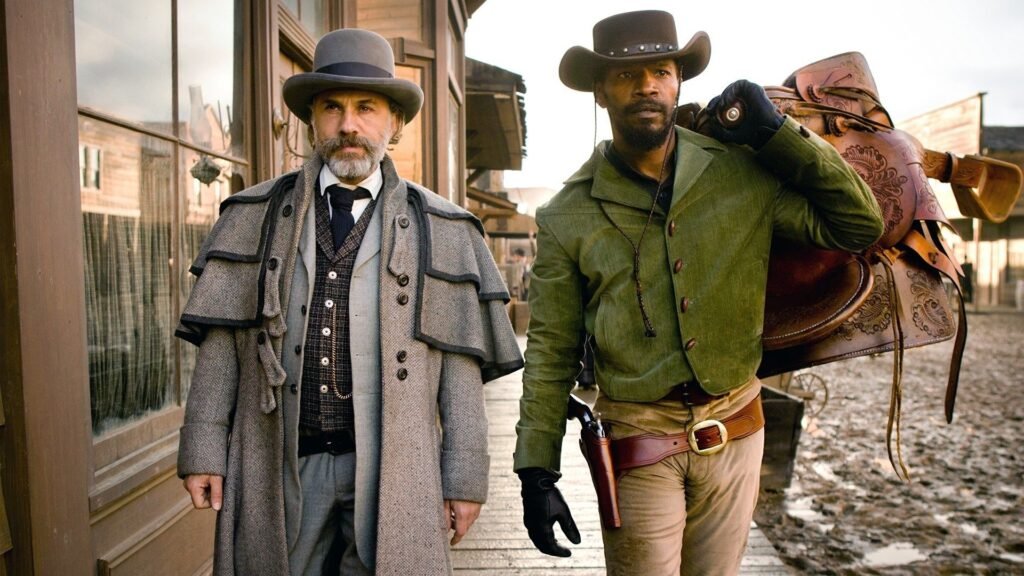
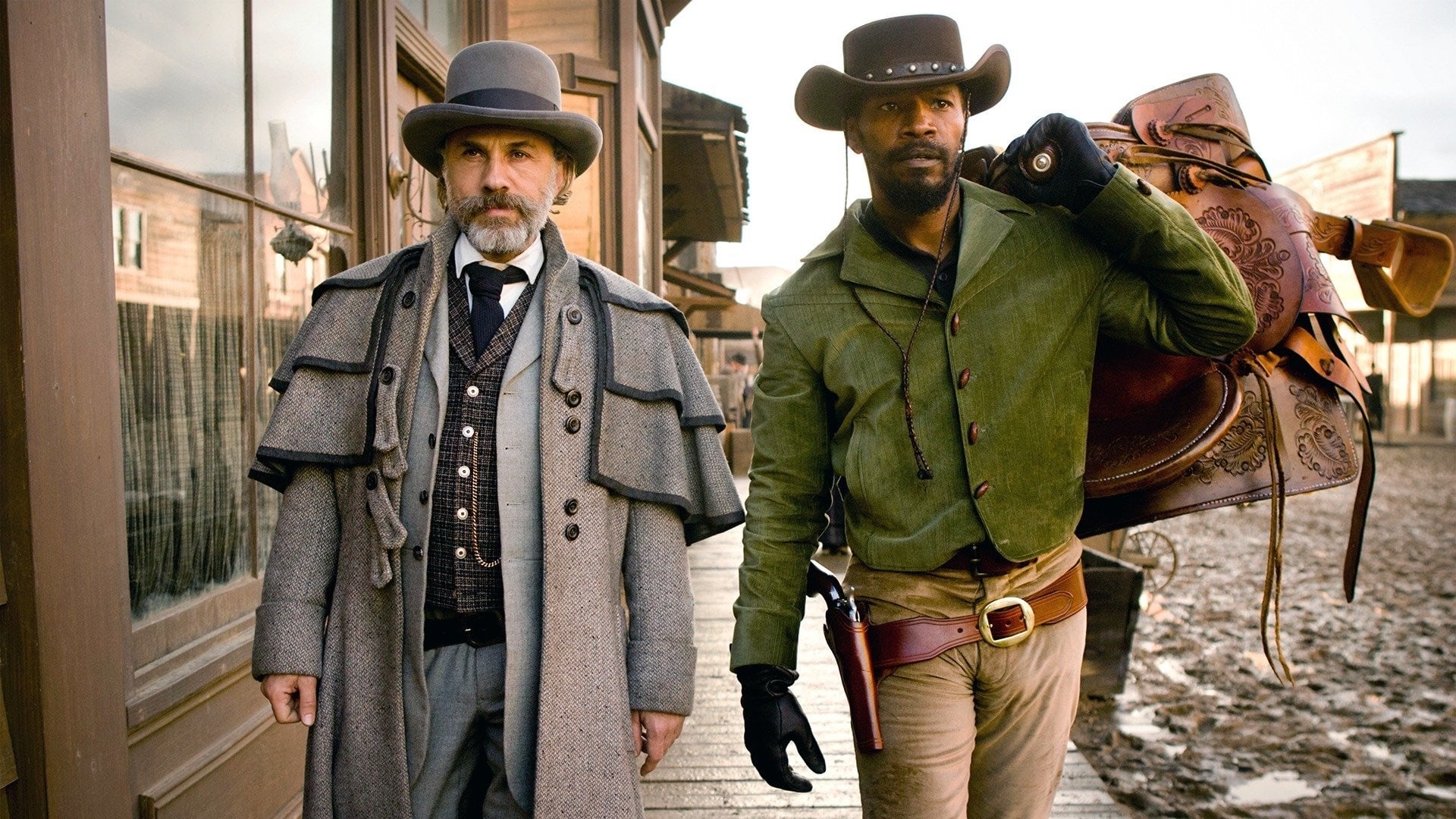

Django Unchained (2012)
⭐ IMDb Rating: 8.5
🎭 Genre: Drama, Western
⏱ Runtime: 165 min
🎬 Director: Quentin Tarantino
📅 Released: 25 Dec 2012
🌍 Country: United States
Introduction
Step into the audacious, blood-soaked, and darkly humorous world of Quentin Tarantino's "Django Unchained." Released in 2012, this revisionist Western immediately cemented its place as a groundbreaking piece of cinema, blending historical drama with Tarantino's signature stylistic flair. Set in the American South two years before the Civil War, the film takes viewers on an unforgettable journey of vengeance, freedom, and an unlikely partnership. It's a bold, ambitious epic that dares to confront one of the darkest periods in American history through a lens that is both unflinching and undeniably entertaining. From its captivating opening scenes to its explosive conclusion, "Django Unchained" ignited conversations, thrilled audiences, and showcased Tarantino at the height of his powers, delivering a cinematic experience that remains talked about years later. Prepare for a ride unlike any other, where stunning visuals meet sharp dialogue and a pulsating soundtrack.
Story
The narrative of "Django Unchained" centers on Django, a slave whose life takes an extraordinary turn after he encounters Dr. King Schultz, a German bounty hunter with a peculiar set of ethics. Schultz frees Django and offers him a deal: help identify three brutal brothers Schultz is tracking, and in return, Django will gain his freedom and a share of the bounty. This unlikely partnership evolves into a deeper quest when Django reveals his desire to find and rescue his wife, Broomhilda, who was sold to a ruthless plantation owner. Their journey leads them to Candyland, the infamous plantation run by the charismatic yet utterly sadistic Calvin Candie. Without giving away crucial plot points, the film masterfully builds tension as Django and Schultz navigate the treacherous world of the antebellum South, using wit, cunning, and lethal force in their pursuit of justice and reunion. It's a powerful tale of resilience and the fight for human dignity against insurmountable odds.
Main Cast

Jamie Foxx
Django Freeman

Christoph Waltz
Dr. King Schultz

Leonardo DiCaprio
Calvin J. Candie

Kerry Washington
Broomhilda von Shaft

Samuel L. Jackson
Stephen

Walton Goggins
Billy Crash

Dennis Christopher
Leonide Moguy

James Remar
Butch Pooch / Ace Speck
Movie Information
| IMDb Rating | 8.5 |
| Genre | Drama, Western |
| Runtime | 165 min |
| Director | Quentin Tarantino |
| Writer | Quentin Tarantino |
| Actors | Jamie Foxx, Christoph Waltz, Leonardo DiCaprio |
| Language | English, German, French, Italian |
| Country | United States |
| Awards | Won 2 Oscars. 58 wins & 158 nominations total |
| Released | 25 Dec 2012 |
Cast Performance
The stellar ensemble cast of "Django Unchained" delivers performances that are nothing short of iconic, elevating the film's already potent script. Jamie Foxx embodies the titular character, Django, with a powerful blend of vulnerability, simmering rage, and burgeoning confidence, making his transformation from a downtrodden slave to a formidable free man utterly believable and compelling. Christoph Waltz, in his Oscar-winning role as Dr. King Schultz, brings a refined eloquence and moral ambiguity to his bounty hunter character, effortlessly balancing intellect with a deadly precision. Leonardo DiCaprio delivers a chillingly unforgettable performance as the plantation owner Calvin Candie, portraying a character of charming ruthlessness that is both magnetic and terrifying. Samuel L. Jackson, as Candie's loyal and cunning house slave Stephen, is equally captivating, offering a nuanced portrayal of a man deeply entrenched in a brutal system. Each actor contributes significantly to the film's emotional depth and dramatic impact, creating a memorable tapestry of characters.
Cinematography
The visual storytelling in "Django Unchained" is a masterful achievement, largely thanks to the breathtaking cinematography by Robert Richardson. Richardson, a frequent collaborator with Tarantino, paints the screen with sweeping vistas of the American South, contrasting the brutal realities of the setting with stunning natural beauty. From the sun-drenched, dusty plains to the opulent yet sinister interiors of Candyland, every frame is meticulously composed, drawing the audience deeper into Django's world. The film's aesthetic employs rich, vibrant colors – particularly striking reds and blues – which amplify the drama and emotion of key scenes, often adding a mythic quality to the violence and heroism. Richardson's camera work expertly captures both the intimate moments of character interaction and the explosive, wide-angle action sequences, ensuring that the film is not just a story, but a visceral, immersive experience that stays with you long after the credits roll. The visual style is as much a character as the actors themselves, defining the mood and atmosphere.
Soundtrack
Quentin Tarantino's films are renowned for their iconic soundtracks, and "Django Unchained" is no exception. The film's musical landscape is an eclectic and audacious blend, mirroring Tarantino's signature style. It ingeniously weaves together classic spaghetti western themes, contemporary hip-hop tracks, gospel, blues, and original compositions to create a truly unique auditory experience. Ennio Morricone's timeless Western scores sit alongside tracks from Rick Ross, John Legend, and the film's original centerpiece, '100 Black Coffins' by Rick Ross, which perfectly captures the film's gritty atmosphere. This diverse selection doesn't just provide background noise; it actively participates in the storytelling, accentuating key moments of tension, humor, and visceral action. The soundtrack is a character in itself, enhancing the film's narrative drive and giving it a distinct, anachronistic cool that only Tarantino can pull off, making it an essential component of the movie's enduring appeal and a joy to listen to independently.
Review
"Django Unchained" arrived to widespread critical acclaim, lauded for its audacious storytelling, compelling performances, and distinctive directorial vision. Critics praised Quentin Tarantino's fearless approach to a challenging historical subject, blending his characteristic wit, stylized violence, and sharp dialogue with a powerful narrative about freedom and retribution. Jamie Foxx, Christoph Waltz, and Leonardo DiCaprio received particular accolades for their magnetic portrayals, with Waltz securing an Academy Award for Best Supporting Actor. While some aspects, particularly the film's graphic violence and its controversial use of historical language, sparked intense debate, the overall consensus recognized it as a masterclass in filmmaking. Reviewers highlighted its technical brilliance, from Robert Richardson's stunning cinematography to the meticulously curated soundtrack, solidifying its status as a bold, unforgettable cinematic achievement that left an indelible mark on the Western genre and contemporary cinema.
Box Office
Upon its release, "Django Unchained" proved to be a resounding commercial success, solidifying Quentin Tarantino's reputation as a director capable of delivering both critical darlings and box office hits. The film garnered over $425 million worldwide against a production budget of approximately $100 million, making it Tarantino's highest-grossing film at the time of its release. Its strong performance domestically and internationally underscored its broad appeal, attracting both dedicated Tarantino fans and general audiences eager for a compelling and action-packed historical drama. The film's impressive box office numbers demonstrated that audiences were keen to engage with its provocative themes and unique stylistic approach, proving that an R-rated, nearly three-hour Western could thrive in a competitive cinematic landscape. Its financial triumph further cemented its place as a significant cultural and commercial phenomenon of the early 2010s.
Awards
"Django Unchained" was not only a commercial success but also a critical darling, earning significant recognition during the awards season. The film received five Academy Award nominations, ultimately winning two prestigious Oscars: Best Original Screenplay for Quentin Tarantino, acknowledging his innovative and powerful writing, and Best Supporting Actor for Christoph Waltz, who delivered a mesmerizing performance as Dr. King Schultz. Waltz also took home the Golden Globe for Best Supporting Actor, while Tarantino secured the Golden Globe for Best Screenplay. Beyond these major accolades, the film garnered numerous nominations and wins from various critics' associations and film festivals worldwide, celebrating its direction, acting, and unique contribution to cinema. These awards underscored the film's artistic merit and its profound impact on both critics and audiences, cementing its legacy as a modern classic.
Who Should Watch This Movie?
If you're a fan of Quentin Tarantino's distinctive filmmaking style, with its sharp dialogue, non-linear narratives, and stylized violence, then "Django Unchained" is an absolute must-watch. It's perfect for those who appreciate revisionist Westerns that challenge traditional genre conventions and explore complex historical themes with a unique blend of drama, action, and dark humor. Viewers who enjoy powerful character performances, especially from actors like Jamie Foxx, Christoph Waltz, Leonardo DiCaprio, and Samuel L. Jackson, will find much to admire. However, due to its graphic depiction of violence and its unflinching portrayal of slavery, it's important to note that the film is not for the faint of heart or those sensitive to mature themes. If you're looking for a thought-provoking, visually stunning, and undeniably engaging cinematic experience that sparks conversation, this film is definitely for you.
Frequently Asked Questions
What genre is Django Unchained?
"Django Unchained" is primarily categorized as a revisionist Western, but it also incorporates elements of a Spaghetti Western, drama, and action film, all infused with Quentin Tarantino's signature style.
Who directed Django Unchained?
The critically acclaimed film "Django Unchained" was written and directed by the renowned filmmaker Quentin Tarantino, known for his distinctive storytelling and stylistic approach.
Is Django Unchained based on a true story?
No, "Django Unchained" is not based on a true story. While set against the historical backdrop of slavery in the American South, the characters and plot are fictional creations of Quentin Tarantino, drawing inspiration from various Westerns and historical narratives.
What are the main themes of Django Unchained?
The main themes explored in "Django Unchained" include freedom and emancipation, vengeance, the brutality of slavery, the search for identity, and the moral complexities of justice in a lawless society.
Is Django Unchained suitable for all audiences?
Due to its graphic violence, mature themes, and explicit language, "Django Unchained" is rated R and is not suitable for all audiences. It is intended for mature viewers who can handle its intense content and historical context.
Official Trailer
You May Also Like
Buddies
1985
⭐ 8.2

Sleepers
1996
⭐ 7.6
JFK
1991
⭐ 7.6
Moulin Rouge!
2001
⭐ 7.5
The Assassination of Richard Nixon
2004
⭐ 6.5

Éclat du destin
2024
⭐ 0.0
Related Movies
Conclusion
In conclusion, "Django Unchained" stands as a monumental achievement in modern cinema, a testament to Quentin Tarantino's audacious vision and unparalleled storytelling prowess. It's a film that masterfully blends the brutal realities of history with the thrilling escapism of a classic Western, all wrapped in a package brimming with unforgettable characters, razor-sharp dialogue, and a pulsating soundtrack. Beyond its entertainment value, the movie sparked important conversations and challenged viewers to confront a difficult period in American history through a uniquely stylized lens. Its critical acclaim, box office success, and numerous awards underscore its enduring impact and its status as a cultural phenomenon. More than a decade later, "Django Unchained" remains a powerful, provocative, and deeply resonant cinematic experience that continues to captivate audiences and solidify its place as one of the most significant films of the 21st century.
Check TMDB to get official information.